
Dominica to discuss Future of CBI Programme with EU by November 12
The Government says CBI revenues have helped fund infrastructure, disaster recovery and national resilience, while regional states seek stronger regulation and realistic timelines for any transition away from the programmes.
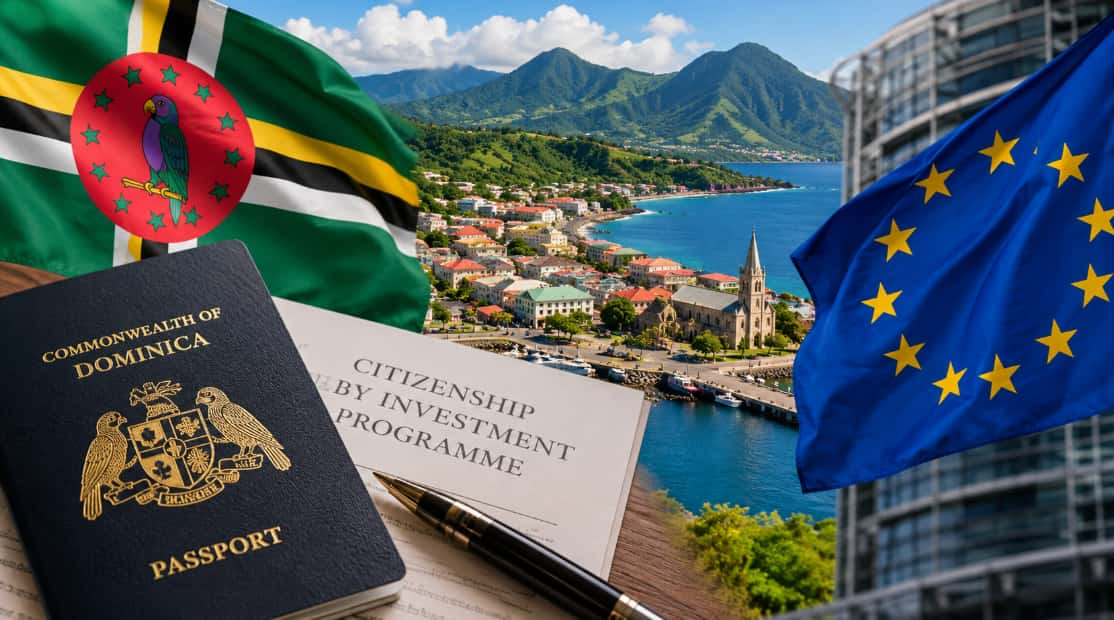
Dominica: The Government of the Commonwealth of Dominica has stated that it will be communicating further with the European Union (EU) by November 12, 2026 about the future of the Citizenship by Investment (CBI) Programme.
In a Statement issued by the Press Secretary on October 28, the Government outlined that they are seeking to ensure a strong relationship with our European partners while protecting our nation’s economic stability.
Deadline set by EU to leave CBI programme by June 2028
According to the statement, the EU has stated that Dominica and other Organisation of Eastern Caribbean States (OECS) countries who operate CBI programmes, need to move away from these by June 2028 to maintain visa-free access to the Schengen Area.
The Government explained that, under Regulation (EU) 2025/2441, which amends Regulation (EU) 2018/1806, the EU has revised its visa suspension policy to include investor citizenship schemes.
“The EU has indicated that Dominica and other OECS countries operating CBI programmes must transition away from them by June 2028 to retain visa-free access to the Schengen Area. Under Regulation (EU) 2025/2441, amending Regulation (EU) 2018/1806, the EU has revised its visa suspension mechanism to include the operation of investor citizenship schemes among the grounds for suspending visa-free travel,” the statement noted.
Importance of CBI to Dominican economy
The Government has outlined the programme means too much to the country’s finances. It noted that it has supported major investment into infrastructure, disaster relief and national resilience through revenues from CBI.
“For Dominica, CBI revenue has helped finance major infrastructure, disaster recovery and national resilience,” the statement read.
It also supports employment and development which might not have been possible without this revenue.
Therefore, the Government has outlined that changes to these revenues require careful thought.
Eastern Caribbean Citizenship by Investment Regulatory Authority (ECCIRA)
The Government has outlined that they are working with regional partners to create the Eastern Caribbean Citizenship by Investment Regulatory Authority (ECCIRA) to increase regulation, due diligence and standardisation between member states.
It is also intended to build confidence in the integrity of their programmes.
“This initiative is intended to strengthen oversight, due diligence and common standards across participating states, and build confidence in the integrity and robustness of our programmes.”
Push for realistic timeframes and support
The Government and its OECS partners have been discussing with the EU about the economic and fiscal implications of discontinuing CBI programmes.
“Alongside this work, Dominica and its OECS partners are discussing with the EU the economic and fiscal implications of discontinuing CBI programmes,” the statement added.
The statement added that the countries have highlighted the circumstances of small, vulnerable economies and the importance of realistic timeframes and adequate support.
The Government has outlined that it will continue to work with the EU in a collaborative manner, to reach a practical solution and agreement that addresses the concerns of the EU and allows any transition to be managed with minimal disruptions to the public finances and development projects.
Now the Government will further communicate with the EU by November 12, 2026 and will keep the Dominican public informed as the discussions progress.
“We will communicate further with the European Union by 12 November 2026 and keep the Dominican public informed as discussions progress,” the statement concluded.
Author Profile

Monika Walker is a senior journalist specializing in regional and international politics, offering in-depth analysis on governance, diplomacy, and key global developments. With a degree in International Journalism, she is dedicated to amplifying underrepresented voices through factual reporting. She also covers world news across every genre, providing readers with balanced and timely insights that connect the Caribbean to global conversations.
Latest
- Dominica to discuss Future of CBI Programme with EU by Novem...
-
Bahamas: King Charles meets PM Davis on first official visit... -
Saint Lucia keeps fuel prices unchanged through 15 November... -
SXM Festival announces Phase One lineup for 10th Anniversary... -
Grenada welcomes 2026-2027 Cruise Season with 192 Ship visit...


