Dominica: Basalt extraction for airport runways fully compliant, says Reginald Severin
Over 50 meetings were held, and measures are in place to protect rivers and forests.
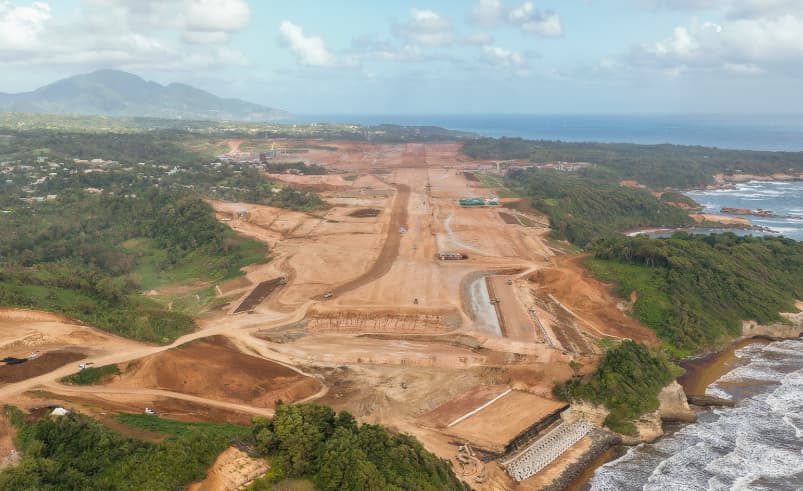
Dominica: Permanent Secretary of the Housing Ministry and Urban Development, Reginald Severin refuted the reports of extraction of copper, gold or other minerals at the international airport site. He issued a statement on DBS radio and outlined that the quarry is being taken place to extract Basalt, a typical construction material, which will be used to construct runways, taxiways and others at the airport.
The quarry is being taken place under a Stonefield Quarry and Crushing Plant Application which was first submitted on July 31, 2025. Severin provided an update on the application and said that this project has been reviewed to ensure that all the rules and regulations are followed to avoid harming the environment and the public safety.
"Government remains fully committed to following due process, upholding the law and ensuring that development is pursued responsibly and sustainably,” he said, as he reassured the public.
It is expected to support the development of the Dominica International Airport. The quarry will provide materials like basalt which is used in the construction of roads, taxiway, and the tunnel infrastructure. This will also create more jobs and economic opportunities for the people of the island nation.
Severin explained that the project was not a mining opportunity for the extraction of minerals like copper, gold, or other materials. The activity proposed is to extract basalt (a typical material used in the construction industry), which is done in accordance with the Mines and Minerals Act.
Since the submission of the proposal, it has been carefully examined according to the Physical Planning Act and other regulations. This involved in-depth Environmental and Social Impact Assessment, technical input from several government bodies, and many opportunities for public input.
Over 50 formal meetings were held to provide an opportunity for local residents to express their concerns. The Physical Planning Division headed up the official review process, which also included input from the Environmental Health Services and the Forestry Division.
Some environmental issues were raised, which have been addressed by the government by putting in place solutions to reduce environmental impact. This included river and stream protection systems. Measures were also taken to prevent soil and water pollution.
The public also raised concerns for the Northern Forest Reserve. Authorities identified the cases early and halted the construction to address the problem and take appropriate measures. This included the establishment of protective buffer zones.
As noted by Reginald Severin, several measures have been put in place in an effort to minimize the impact of construction on streams and rivers. These measures include the use of sedimentation basins for ponds, proper drainage systems, and retaining walls for streams and rivers.
The government is also attempting to minimize the risk of contamination through the use of off-site service for equipment and implementing erosion and sedimentation control systems; and is actively monitoring both soil and water quality.
Another significant concern addressed by the Government of Dominica was road safety, which led to the establishment of guidelines relating to the safe transportation of goods as well as proper traffic management practices.
As part of the legal process, a “Stop Order” was issued in December of 2025. The project was divided into two parts - the first is the crushing plant, and the second is the quarry. As a result, there were new applications filed separately for each of these parts. Approval was granted for the installation of the crushing plant on March 6, 2026, while the quarry is still going through the legal process.
The government of Dominica highlighted its commitment to development of the project, which also protects the environment. It is aimed for a balance between growth and the preservation of nature and local communities.
Author Profile

Monika Walker is a senior journalist specializing in regional and international politics, offering in-depth analysis on governance, diplomacy, and key global developments. With a degree in International Journalism, she is dedicated to amplifying underrepresented voices through factual reporting. She also covers world news across every genre, providing readers with balanced and timely insights that connect the Caribbean to global conversations.
Latest
- Guyana: Father admits throwing 6-year-old into canal after P...
-
Antigua and Barbuda: 49-year-old man and 18-year-old woman k... -
Belize: Teen charged with aggravated burglary at El Chiclero... -
Guyana: Missing six-year-old Orlando Jaikarran found dead, f... -
Two-month-old found dead at Trinidad home weeks after open-h...