
Barbados makes history as WHO certifies elimination of mother-to-child HIV transmission
The recognition follows three years without recorded mother-to-child HIV infections among infants born in Barbados between 2022 and 2024, alongside high coverage of maternal health services.
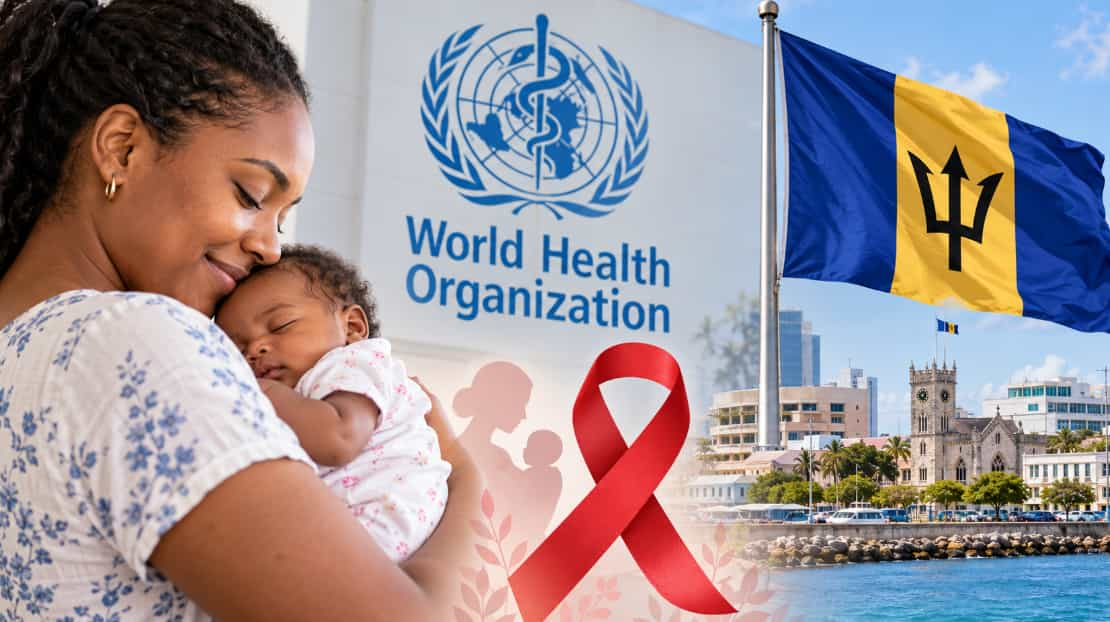
Barbados: Barbados has been recognised by the World Health Organisation (WHO) for eliminating mother-to-child transmission of the Human Immunodeficiency Virus (HIV) as a public health problem.
This comes after years of hard work to ensure babies are born HIV free within the country.
The latest recognition acknowledges 15 countries and territories in the Americas by WHO for this success, which is more than in any other region.
Globally there are 26 countries and territories recognised for eliminating mother-to-child transmission of HIV, syphilis or hepatitis B, or being on course to do so.
WHO noted that an independent review confirms that Barbados has achieved the global targets, and reported, between the year 2022 and 2024, no new HIV infections linked to mother-to-child transmission were recorded among infants born in the country.
The review also found that services had been provided to a consistently high level within the three-year period. Around 98% of pregnant women received antenatal services, 98% were tested for HIV and 98% of pregnant women living with HIV received antiretroviral therapy.
WHO Director-General Dr. Tedros Adhanom Ghebreyesus congratulated Barbados for protecting a generation of children from HIV.
"I congratulate Barbados on protecting a generation of children from HIV," he said.
He further added, "Barbados has shown what universal health coverage looks like in practice: free services for every pregnant woman, regardless of nationality, and care that respects her rights and privacy. With 15 countries and territories in the Americas now recognized, the region continues to show the world the way."
Dr. Jarbas Barbosa, Director of the Pan American Health Organization (PAHO) and WHO Regional Director for the Americas, said this achievement demonstrates that mother-to-child transmission can be eliminated if women and children have access to quality health services.
"Barbados has shown that eliminating mother-to-child transmission of HIV is possible when women and children have access to quality health services without barriers," Dr. Barbosa noted.
He said children can be born HIV free and women living with HIV can receive the care and treatment they require.
"This achievement means that children are born free of HIV and that women living with HIV can access the care and treatment they need. It is a proud moment for Barbados, the Caribbean, and the global effort to end AIDS in children," he said.
Lisa Cummins, Minister of Health and Wellness of Barbados said, "This is incredible for us, and it allows us to be able to see our children living their full, best lives.”
“It allows mothers to be able to have the benefit of treatment during pregnancy, before treatment, but also, it means that we're able to ensure that we have a healthier population, and we're able to join the other countries around the globe that have also equally been able to achieve this historic milestone,” she further added.
WHO noted that this achievement has been made possible through a long-term collaboration between the Government of Barbados, PAHO/WHO and other partners to strengthen services, surveillance and quality of care related to HIV.
Regional partners were also pleased with the news. Robert Benes, UNICEF Regional Director for Latin America and the Caribbean, said, “The Elimination of vertical transmission of HIV implies that in Barbados, a diagnosis of HIV during pregnancy no longer has to mean transmission to a child. It means that testing, treatment and care have reached the women and families who need them."
Luisa Cabal, UNAIDS Regional Director for Latin America and the Caribbean said, “UNAIDS is delighted to share in the success of your work and leadership as healthcare workers, people living with HIV, civil society and the technical and political leaders who have helped ensure that every woman can receive the treatment and care they need so HIV is not passed on to their baby.”
“We are overjoyed that Barbados has now been certified. This is a record that reflects political commitment, technical and community leadership and investment in integrated health services grounded in human rights and gender equality.”
“UNAIDS commends PAHO for its leadership in the region and all partners at the country and regional levels who have been supporting these efforts," she added.
Author Profile

Sasha Baptiste reports on local Caribbean news with a strong focus on crime, justice, community issues, and entertainment. With a background in sociology and journalism, she brings a grounded, people-centered perspective to her reporting, shedding light on the challenges and resilience within Caribbean societies.
Latest
- Barbados makes history as WHO certifies elimination of mothe...
-
Belize: Four killed in shooting, Police investigate possible... -
St. Kitts and Nevis: PM Drew chairs Cabinet meetings as 2027... -
Jamaica: Police fatally shoot 44-year-old man during operati... -
Guyana’s Kelvin Johnson, 10,000 m record holder and youth me...


