
Antigua and Barbuda plans citizenship revocation for naturalised citizens convicted of serious crimes
Prime Minister Gaston Browne says naturalised citizens convicted of serious crimes could have their citizenship revoked and be deported after serving their sentences under a government policy now being considered.
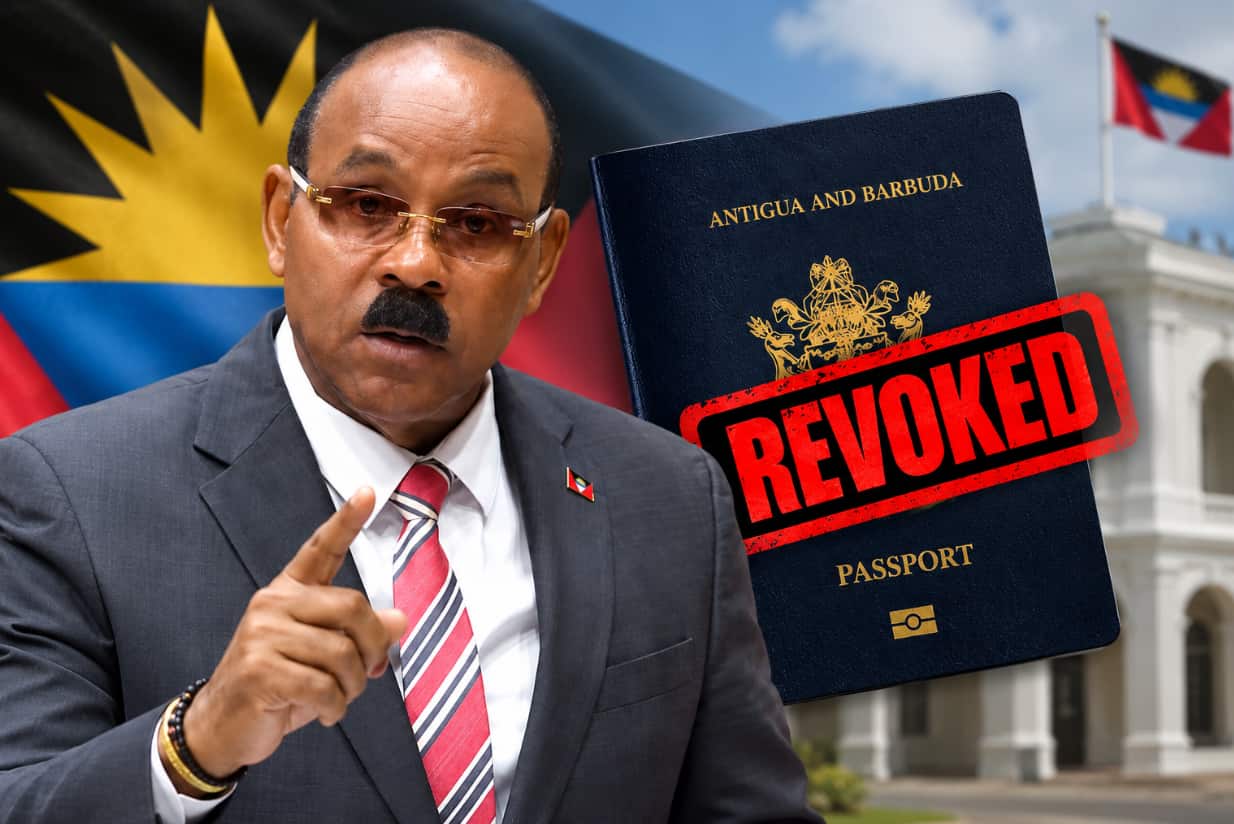
Antigua and Barbuda: The government of Antigua and Barbuda wants to strip naturalized citizens of their citizenship if they commit serious crimes and deport them after they have served their prison sentences, Prime Minister Gaston Browne said on Monday, September 28, 2026.
Browne spoke about the Firearms (Amendment) Bill 2026 before the House of Representatives and announced the policy during the debate.
He said the Cabinet took a decision as a part of the government’s response to a rise in crime and violence in Antigua and Barbuda.
Browne addressed first foreign nationals living in the country saying immigrants are expected to respect the nation’s laws and that they could be deported after serving criminal sentences.
“We expect you to respect our laws, and if you fail to respect our laws, you serve your time and you’re deported,” Browne announced.
He then mentioned people who became citizens through naturalisation, noting that the government plans to go further in their cases.
He began by referring to heinous crimes before broadening his remarks to serious crimes.
“They cannot commit any serious crime in this country. We will revoke citizenship and deport them,” Browne said.
The Prime Minister did not mention which offences would count as serious, or whether new legislation would be needed.
Browne noted that the Cabinet has already decided upon the policy and that he is using his parliamentary contribution to alert the public about it.
“That decision has been taken by the Cabinet already, and I'm sensitising the public, especially our immigrants, because they must know the reason behind it,” Browne said.
He added that the government is not targeting the immigrants as the administration is inclusive and welcoming towards them, however, he said that the approach would not stop the government from taking action against those who might become a threat to public safety.
“Where they become a threat to public safety, we are duty bound to do whatever is necessary to keep this country safe,” Browne stated.
Browne stressed that crime and violence especially youth crime, had become one of the country's most pressing problems and that addressing it would require the involvement of government, law enforcement, families and the wider society.
Author Profile

Monika Walker is a senior journalist specializing in regional and international politics, offering in-depth analysis on governance, diplomacy, and key global developments. With a degree in International Journalism, she is dedicated to amplifying underrepresented voices through factual reporting. She also covers world news across every genre, providing readers with balanced and timely insights that connect the Caribbean to global conversations.
Latest
- Trinidad and Tobago: 19-year-old found dead from gunshot wou...
-
Dominica: Samantha Bazil of Wesley wins Crowned Miss Wob Dwi... -
St. Kitts and Nevis: Acting PM Geoffrey Hanley calls for str... -
Discover Airlines to Launch Frankfurt–Belize Flights in Dece... -
Belize: 34 Athletes prepare for 2026 CODICADER Disability Ga...


