CARICOM followed proper procedures in Barnett reappointment, says Dr. Drew
Dr. Terrance Drew said all member states had been informed in advance of discussions on governance issues raised by Trinidad and Tobago.
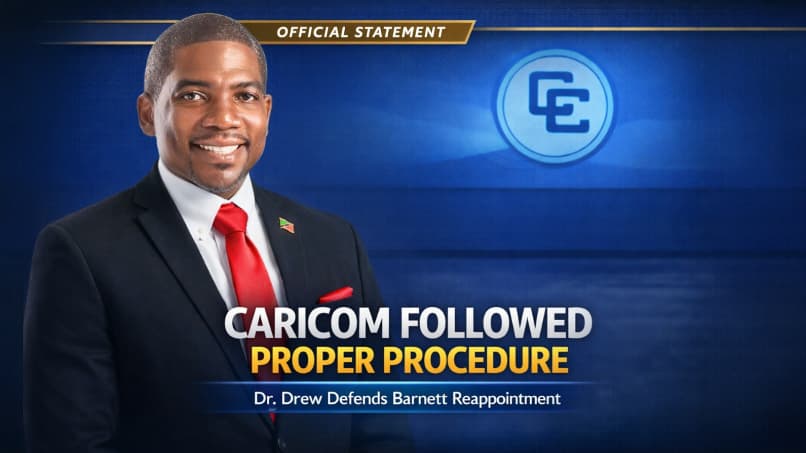
Caribbean: The Chairman of the Caribbean Community (CARICOM), Dr. Terrance Drew, has defended the process used to reappoint Secretary General Carla Barnett while saying that all procedures were properly followed. His comments come after criticism from Trinidad and Tobago Prime Minister Kamla Persad Bissessar who said she was not consulted before the decision was made.
In an official statement following a special emergency held on April 10, 2026 to address governance matters raised by Trinidad and Tobago, including issues surrounding the reappointment of the Secretary General, Dr. Drew explained that all member states were informed ahead of the earlier February meeting where the issue was discussed. He said documents, agendas and meeting details were shared with all governments and acknowledged before the meeting took place.
This issue comes amid heightened regional tensions with PM Kamla Persad-Bissessar strongly criticizing the reappointment of Dr Carla Barnett and asking for accountability from the regional bloc.
Addressing the issue, St. Kitts and Nevis Prime Minister pointed out that Trinidad and Tobago was not represented during key discussions. According to him, Trinidad and Tobago PM departed before the retreat session and subsequent communication indicated that the Foreign Minister might also be unable to attend. This resulted in the country not being represented during critical deliberations on governance and financing.
The Prime Minister of Trinidad and Tobago departed St Kitts and Nevis on the evening of the first day of the Conference, February 25, before the Retreat on February 26. On 25 February at 10:33 PM Foreign Minister Sean Sobers called the Secretary General on WhatsApp to inquire if he should attend the Retreat in the absence of his Prime Minister. He was advised he could and that other Heads who have had to leave may be represented by their Foreign Ministers. He indicated that he had a problem with seasickness so he may not be able to attend, Dr. Drew noted in his official statement.
During the retreat session, Heads of Government agreed to the reappointment of the Secretary General in accordance with Article 24 of the Revised Treaty of Chaguaramas, he said adding that the decision was taken collectively and that the Secretary General was not present in the room during the discussion.
He further noted that efforts were made to inform absent leaders of the decision before any public announcement however attempts to contact Trinidad and Tobago’s Prime Minister were not successful at the time which is why communication was eventually directly towards the country’s Foreign Minister as an alternative.
In addition to the re-appointment decision, the meeting resulted in the establishment of a sub committee comprising representatives from Barbados, Dominica, Guyana and Jamaica. This body has been tasked with reviewing governance and financing arrangements within CARICOM institutions.
The Chair underscored the significance of resolving internal challenges through established regional processes. He expressed concern that public statements made outside these mechanisms could undermine progress toward deeper regional integration.
On the other hand, PM Kamla has described the process as surreptitious and odious and warned of wider implications for CARICOM governance. While CARICOM leadership maintains that all procedures were followed and that efforts were made to inform absent leaders before any public announcement, Trinidad and Tobago continues its boycott which leaves the matter unresolved as behind the scenes consultations continue.
Author Profile

Monika Walker is a senior journalist specializing in regional and international politics, offering in-depth analysis on governance, diplomacy, and key global developments. With a degree in International Journalism, she is dedicated to amplifying underrepresented voices through factual reporting. She also covers world news across every genre, providing readers with balanced and timely insights that connect the Caribbean to global conversations.
Latest
- WATCH: Ne-Yo, Tabou Combo, Extasy Band and Full Blown perfor...
-
Trinidad: Wanted man killed in police-involved shooting duri... -
American Airlines flight returns to Miami after passenger al... -
St. Kitts and Nevis Broadcaster Saju Ng’alla dies -
WATCH: World Creole Music Festival 2026 opens with vibrant p...