
St. Kitts and Nevis: Acting PM Geoffrey Hanley calls for stronger education-to-employment links ahead of 2027 Budget
Economic projections presented at the forum point to 2.6% growth in 2026 and average annual growth of 3.5% from 2027 to 2030, alongside calls for investment and skills development.
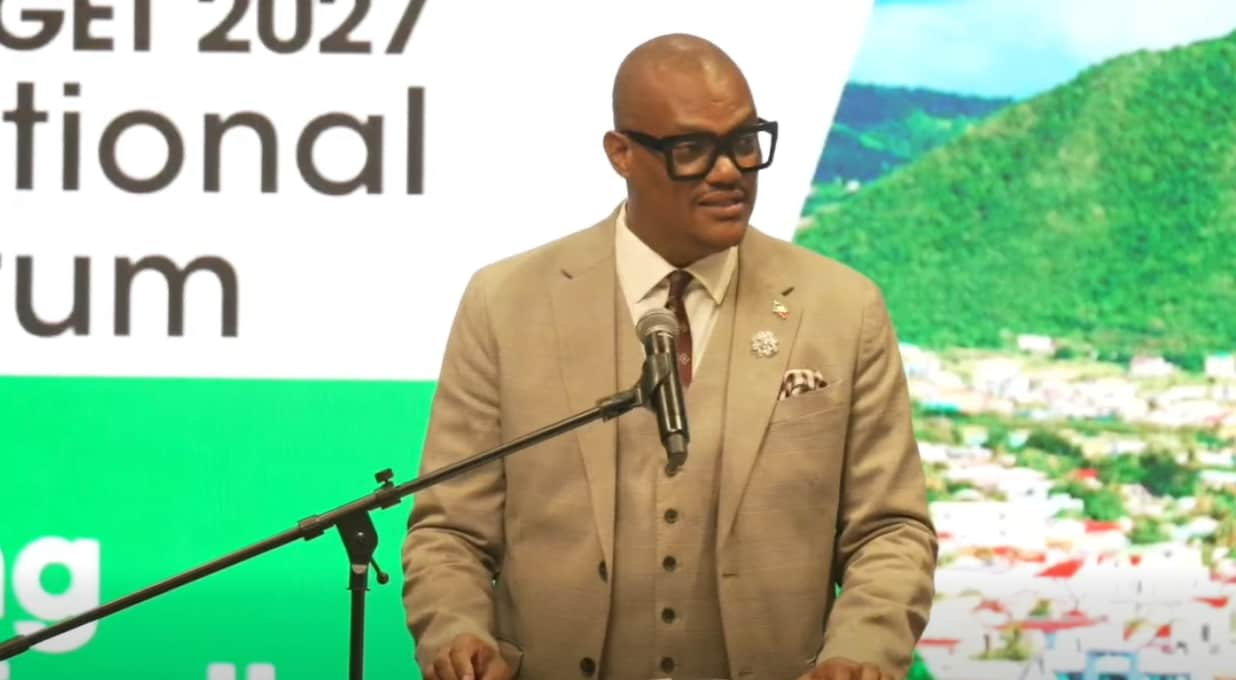
St. Kitts and Nevis: Acting Prime Minister Dr. Geoffrey Hanley has called for enhanced connections between education, technical training and the jobs that are emerging in the economy, as the Government commenced consultations on its budget for the fiscal year 2027.
Dr. Hanley, Minister of Education, delivered the keynote address at the Budget 2027 National Forum, which was held on October 20, 2026.
The theme of the Budget 2027 National Forum was “Investing strategically, strengthening resilience, delivering for the people.”
He noted that he has particular interest in the space between a young person leaving school and being secure in a job, noting that construction, renewable energy, healthcare, agriculture, tourism and digital services all require skills.
He mentioned that all the young people should now be prepared for such opportunities.
“We must strengthen the connection between education, technical training, and the opportunities emerging in our economy. Construction, renewable energy, healthcare, agriculture, tourism, and digital services all require skills. Our young people should be prepared for those opportunities now,” Dr. Hanley said.
Hanley further noted that adults who need to retrain should have practical pathways to do so and the employers must be part of that conversation, helping them understand the skills they need and offering opportunities to gain experience.
He said, “One important measure of progress is whether a young person can look ahead and see a future worth working towards in St Kitts and Nevis.”
The Acting Prime Minister emphasised that the latest projection is that the economy will grow 2.6% by the end of 2026, with an average of 3.5% a year from 2027 to 2030.
“The latest estimate projects economic growth of 2.6% in 2026, with average annual growth of 3.5% over the period 2027 to 2030.
He noted that achieving these projections will require investment, sound management, productive enterprise and the nation’s ability to respond to changing circumstances.
He reported that construction remains the largest contributor to GDP at 13.9%, and is projected to grow by 5.7% this year.
Hotels and restaurants are expected to grow 1.7% in 2026, supported by increased airlift and strategic marketing. Furthermore, agriculture and fishing are set to grow by an average of 7.9% a year over the medium term.
Further on cost of living, he pointed to the decision to raise the minimum wage and provide household relief but acknowledge that improvements in the economic indicators can take time to be felt in households.
“We must keep listening to families about the cost of living. Our decisions to raise the minimum wage and provide household relief reflect our understanding of those pressures. We know, too, that an improvement in an economic indicator may take time to be felt around the kitchen table,” Hanley noted.
Dr. Hanley also said the Government acknowledges that people are entitled to expect results, and that scrutiny of its record ahead of 2027 is part of democratic life.
“People are entitled to expect results. They are entitled to ask when a project will be completed, whether a service will be reliable, and how an investment will improve their lives. And as a government, we accept that responsibility.”
He also invited the participants to bring forward specific proposals, including what services most limit their business or community, and to challenge the Government’s assumptions where their experience indicates a better approach.
Lastly, Dr. Hanley expressed a special thanks to the Ministry of Finance for their continued hard work and guidance.
Author Profile

Monika Walker is a senior journalist specializing in regional and international politics, offering in-depth analysis on governance, diplomacy, and key global developments. With a degree in International Journalism, she is dedicated to amplifying underrepresented voices through factual reporting. She also covers world news across every genre, providing readers with balanced and timely insights that connect the Caribbean to global conversations.
Latest
- Dominica: Samantha Bazil of Wesley wins Crowned Miss Wob Dwi...
-
St. Kitts and Nevis: Acting PM Geoffrey Hanley calls for str... -
Discover Airlines to Launch Frankfurt–Belize Flights in Dece... -
Belize: 34 Athletes prepare for 2026 CODICADER Disability Ga... -
Dominica: Social Security director Janice Jean Jacques Thoma...


