US and CARICOM sign Biometric Data-Sharing Agreement to strengthen border security
The agreement creates a framework for sharing biometric data to strengthen border security, immigration vetting and the identification of potential security risks across the United States and CARICOM member states.
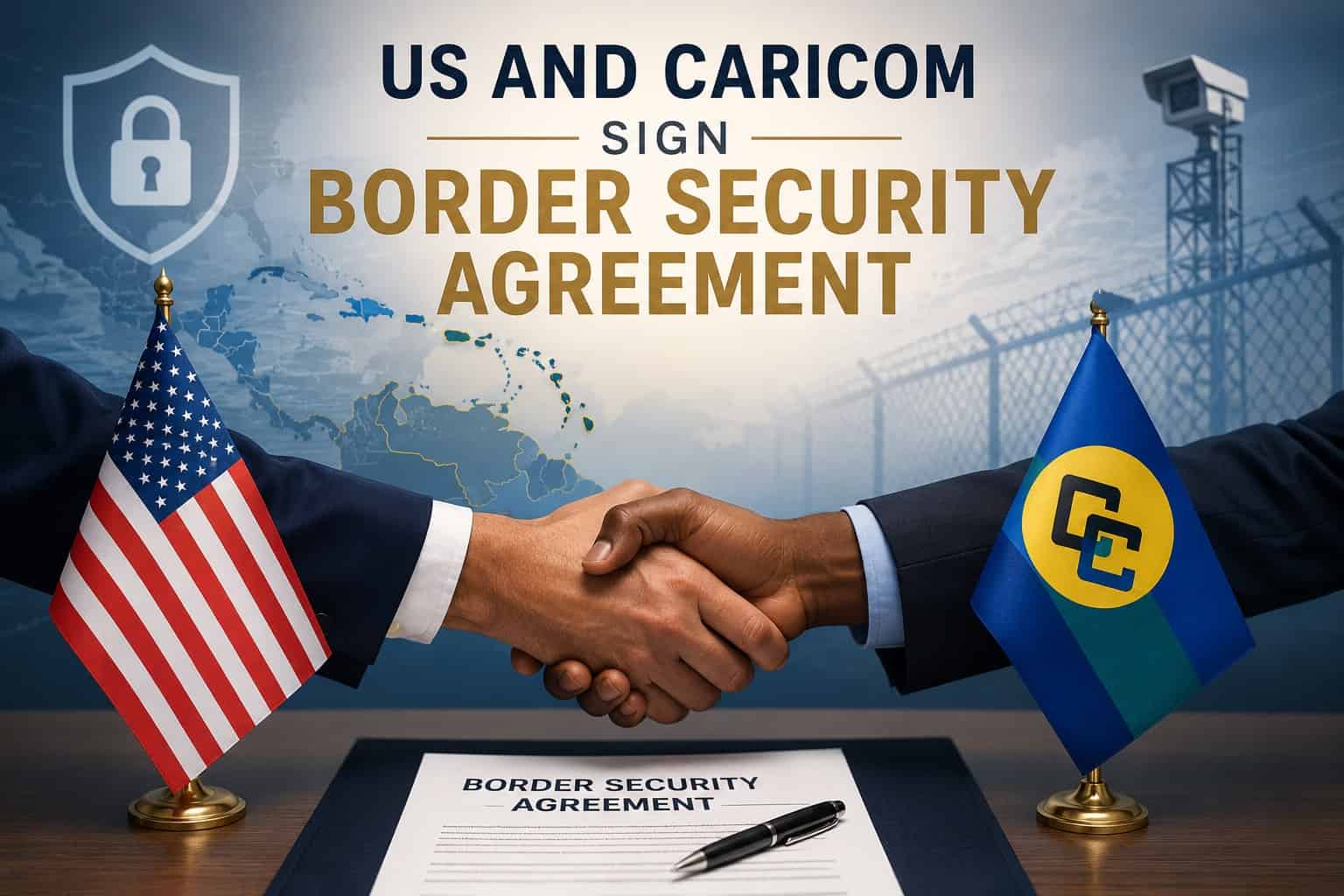
The United States and the Caribbean Community (CARICOM) have signed a new landmark Border Security Pact Agreement that establishes a comprehensive Biometric Data-Sharing Partnership.
The Memorandum of Cooperation was signed under the Caribbean Community (CARICOM) Implementation Agency for Crime and Security (IMPACS) marking as the US State Department officials have stated that the agreement notes a significant alignment of Caribbean border security standards with the United States and CARICOM IMPACS.
The MOC was signed on July 10 in Washington, D.C. by Rob Law, Under Secretary for Strategy, Policy and Plans at the US Department of Homeland Security, and Lieutenant Colonel Michael Jones, Executive Director of the CARICOM Implementation Agency for Crime and Security (IMPACS).
The signing ceremony was hosted by the Ambassador of St. Kitts and Nevis at the country's embassy in Washington. The ceremony included representatives from Antigua and Barbuda, Dominica, Grenada, St .Kitts and Nevis, St Lucia, St Vincent and the Grenadines, and the Eastern Caribbean Central Bank, along with officials from the US Homeland Security Council and the State Department.
According to the U.S. Department of Homeland Security (DHS), the agreement represents the department’s first multilateral biometric information-sharing arrangement.
"The signing of this memorandum of cooperation marks DHS's first multilateral biometric information-sharing arrangement," Rob Law said.
"This will strengthen cooperation between DHS and CARICOM IMPACS on border security and immigration vetting," he added.
The agreement aims at creating a framework for automated data exchanges intended to support the screening, vetting and investigation of individuals considered potential national security, public safety or immigration risks to the United States and CARICOM member states.
Both DHS and CARICOM IMPACS noted that they are working toward making the arrangement fully operational by the end of 2026.
Author Profile

Monika Walker is a senior journalist specializing in regional and international politics, offering in-depth analysis on governance, diplomacy, and key global developments. With a degree in International Journalism, she is dedicated to amplifying underrepresented voices through factual reporting. She also covers world news across every genre, providing readers with balanced and timely insights that connect the Caribbean to global conversations.
Latest
- Dominica featured by AFAR as "Caribbean’s best destinations...
-
Guyana plans direct flights to French Guiana as new air agre... -
St. Kitts earns 11 honours in 2027 Scuba Diving Readers’ Cho... -
Grenada: PM Dickon Mitchell announces November 5 general ele... -
Barbados Open Water Festival set to attract hundreds of swim...