
Spain grants visa-free access to citizens of 9 Caribbean nations
Citizens of nine Caribbean nations can now travel to Spain without a visa for stays of up to 90 days within a 180-day period, provided they meet the Schengen Area's entry requirements.
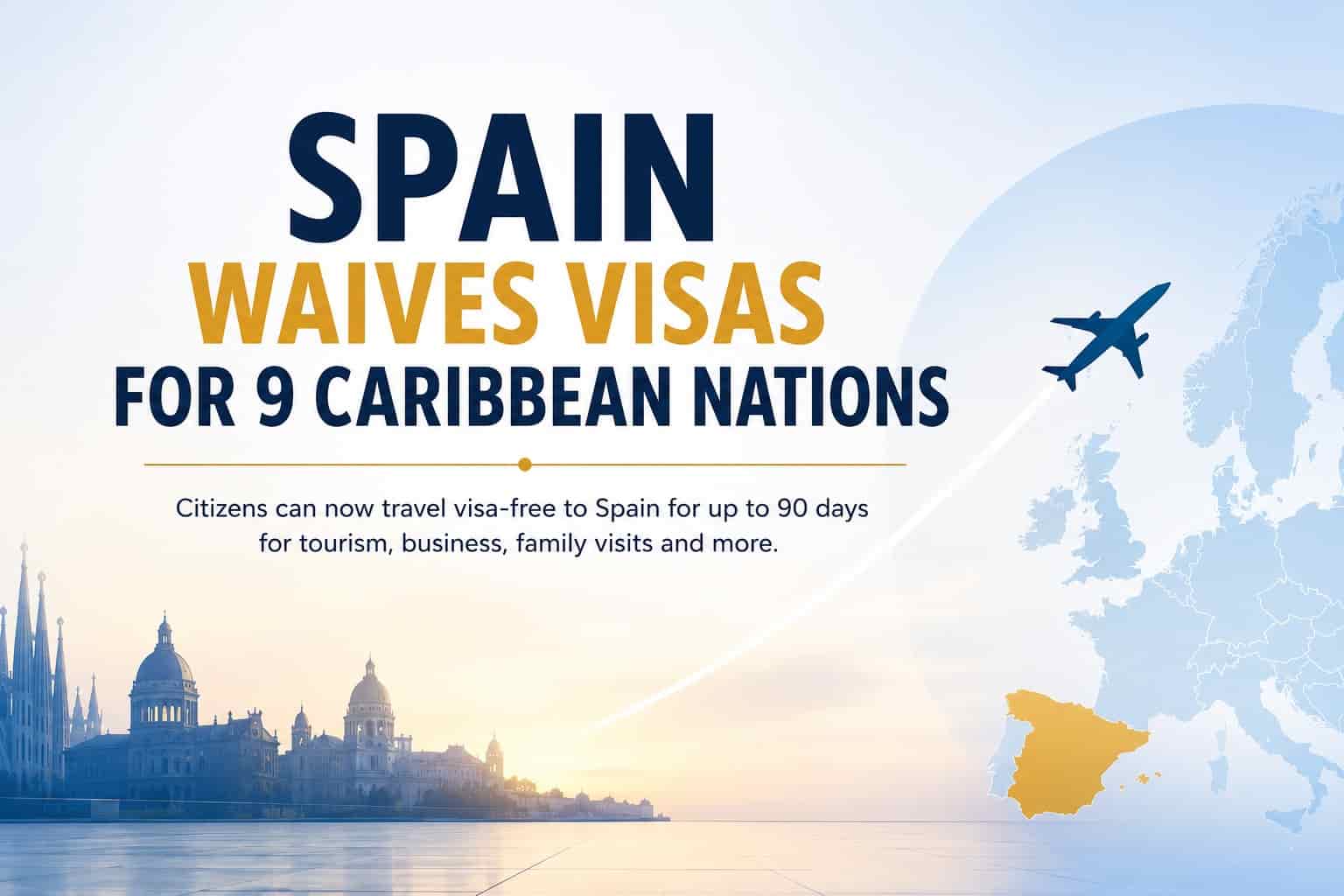
Caribbean: Spain has waived visa requirements for citizens of nine Caribbean Community (CARICOM) nations, allowing eligible citizens to enter Spain for short stays. This move will make travel easier for people visiting for tourism, business, family, and other reasons.
The new visa-free agreement includes Antigua and Barbuda, Barbados, The Bahamas, Dominica, Grenada, St. Kitts and Nevis, Saint Lucia, Trinidad and Tobago, and St Vincent and the Grenadines. Citizens holding an ordinary passport from these countries can travel to Spain without first applying for a visa, if they stay only for 90 days within a 180-day period.
Nationals of third States (non-EU/EEA/CH citizens) who travel to Spain for stays of up to 90 days (during any period of 180 days) for tourism, business, family visits, medical treatment, study, non-work internships or volunteer activities with a duration not exceeding 3 months, or for other non-gainful activities, must meet the entry conditions established in the Schengen Border Code, said the Ministry of Foreign Affairs, European Union and Cooperation.
CARICOM members not included are Jamaica, Guyana, Suriname, Belize, and Haiti. Citizens of these nations still have to apply for a Schengen visa before traveling to Spain or other countries in the area.
Spain has also extended this visa-free access to eight African countries, including Botswana, Namibia, Eswatini, Lesotho, Mauritius, Seychelles, Cape Verde, and Rwanda.
Schengen Area refers to a group of European countries that allows people to travel across international borders without passport checks. In most cases, a visa from one Schengen country lets individuals travel throughout the entire Schengen zone.
This will let eligible travelers from the newly approved countries to visit other member countries of the Schengen zone during their permitted stay, subject to standard entry requirements.
This visa-free entry does not remove all of the travel requirements. Travelers may still be requested to provide a valid passport, proof of residency, a return or continuing ticket, proof of financial resources, and travel insurance. Moreover, immigration officials will have the right to deny entry if travelers fail to meet the required criteria.
Author Profile

Monika Walker is a senior journalist specializing in regional and international politics, offering in-depth analysis on governance, diplomacy, and key global developments. With a degree in International Journalism, she is dedicated to amplifying underrepresented voices through factual reporting. She also covers world news across every genre, providing readers with balanced and timely insights that connect the Caribbean to global conversations.
Latest
- Dominica featured by AFAR as "Caribbean’s best destinations...
-
Guyana plans direct flights to French Guiana as new air agre... -
St. Kitts earns 11 honours in 2027 Scuba Diving Readers’ Cho... -
Grenada: PM Dickon Mitchell announces November 5 general ele... -
Barbados Open Water Festival set to attract hundreds of swim...