
Guyana braces for up to 80 extreme heat days as El Niño strengthens
Regions Four, Five, Six, Eight and Ten are expected to experience the highest number of extreme heat days as El Niño brings hotter temperatures and drier conditions across Guyana.
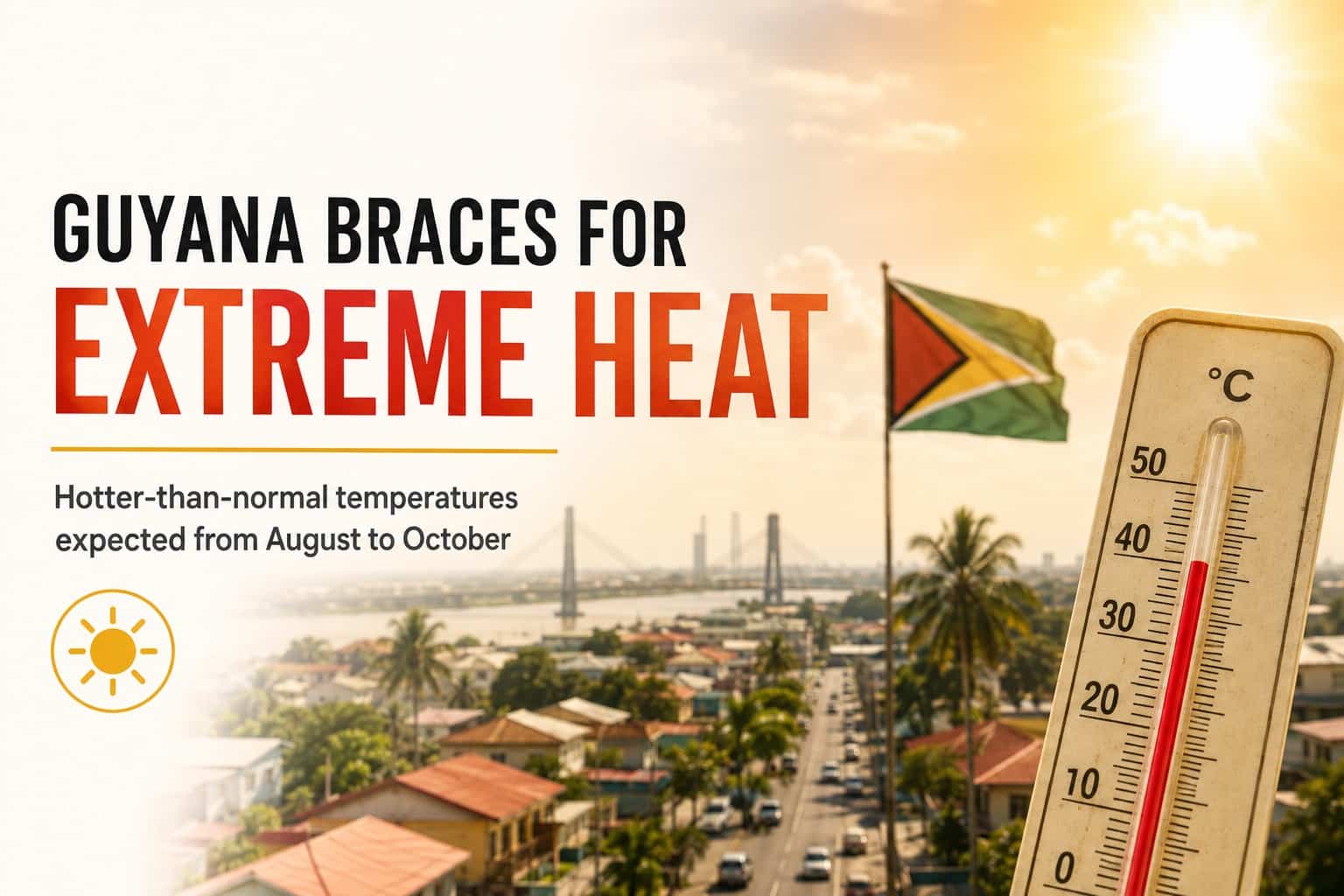
Guyana: According to the reports by the Hydrometeorological Service, Guyana is expected to experience a sharp increase in hot spell days this year as the strengthening El Niño conditions will bring hotter-than-normal temperatures and drier conditions from August through at least October 2026.
The latest seasonal outlook indicates that up to 80 hot spell days are expected to occur this year, as compared with the historic average of about 30 days annually.
Reports noted that the regions Four, Five, Six, Eight and Ten are expected to record the highest frequency of extreme heat events.
The country is also expected to experience fewer wet days and above-normal daytime and night-time temperatures, the Hydrometeorological Service noted.
El Niño is referred to the abnormal warming of sea surface temperatures across the central and eastern equatorial Pacific, along with the weakening of trade winds. This climate pattern typically brings warmer and drier conditions, however, heavy rainfall events can still occur.
Preliminary reports indicate that these conditions could affect agriculture, water resources, energy supply, education, transportation, forestry and public health. The reduced rainfall is likely to increase water demands for crops and livestock and lower river levels will potentially disrupt the hinterland transportation.
The Hydrometeorological Service warned that the dry vegetation and prolonged heat can increase the risk of forest fires, however, the extreme hot temperatures can lead to dehydration, heat exhaustion and heat stroke, especially among outdoor workers and vulnerable groups, including kids and old-age people.
Following the forecast by the Service, the public has been advised to stay hydrated, conserve water, avoid strenuous outdoor activities during extreme heat hours, ensure schools and offices have adequate drinking water, wear light clothing and avoid such activities that can trigger fire.
Furthermore, the Hydrometeorological Service noted that it will keep monitoring the conditions and will provide updates as the El Niño develops.
Author Profile
Stay updated with WIC News' coverage of all the major happenings and updates on the developing weather systems across Caribbean including Hurricanes, Tropical Storms or Cyclones.
Latest
- Guyana: Security guard Esan Rose shot dead at Georgetown sup...
-
Guyana: Teacher and former national athlete Leslyn Major die... -
Belize: Several injured after steps collapse during wake in... -
Guyana: Police Deputy Commissioner placed on leave over rape... -
Trinidad: Man fatally stabbed after altercation in Enterpris...


