
Trinidad and Tobago elected as non-permanent member of UNSC
Trinidad and Tobago secured a non-permanent seat on the UN Security Council with 181 votes, marking strong global backing as it prepares to influence international peace and security priorities.
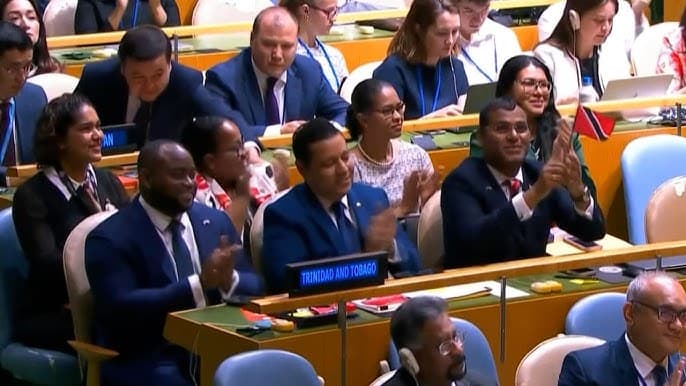
Trinidad and Tobago has achieved a significant diplomatic milestone by being elected as a non-permanent member of the United Nations Security Council (UNSC) for the term 2027-2028 under the powerful and strategic leadership of Prime Minister Kamla Persad-Bissessar.
The elections were conducted on the morning of June 3, 2026 where Trinidad and Tobago won 181 votes out of 191 voting member states, marking a 95% approval rate in the first round of voting, as a country needs a two-thirds majority of the UN General Assembly, which marks to amounting to approximately 129 votes.
The nation was globally supported by all the five permanent members of the Security Council during the voting, the United States, the United Kingdom, France, China and Russia.
The country’s strategic campaign was introduced earlier in September 2025 by the Prime minister at the UN General Assembly in New York. This campaign’s core theme is “Building Consensus for the Realization of Sustainable Peace and Security.”
The campaigns’ focus is built on three core strategies:
Curbing the Illicit Trafficking of Small Arms and Light Weapons
Women and Children, Peace and Security and
Artificial Intelligence and Global Security
The campaign is aimed at minimizing the crime rates throughout the nation, addressing modern, tech driven threats and focusing on minorities in conflict zones.
The achievement showcases strong strategic leadership, and a diplomatic commitment of working for the peace and security of the people of Trinidad and Tobago.
According to the reports, the position in the UNSC will help represent the nation’s voice across international borders. It will also strengthen the country's diplomatic standing, enhance the influence within the international community, and open new avenues and opportunities for strategic partnerships and engagement with the rest of the world.
Author Profile

Monika Walker is a senior journalist specializing in regional and international politics, offering in-depth analysis on governance, diplomacy, and key global developments. With a degree in International Journalism, she is dedicated to amplifying underrepresented voices through factual reporting. She also covers world news across every genre, providing readers with balanced and timely insights that connect the Caribbean to global conversations.
Latest
- Trinidad and Tobago: 19-year-old found dead from gunshot wou...
-
Dominica: Samantha Bazil of Wesley wins Crowned Miss Wob Dwi... -
St. Kitts and Nevis: Acting PM Geoffrey Hanley calls for str... -
Discover Airlines to Launch Frankfurt–Belize Flights in Dece... -
Belize: 34 Athletes prepare for 2026 CODICADER Disability Ga...