Dominica lowers income tax rate to flat 10% from January 2027
The new tax system will replace the existing three-tier structure while keeping the EC$30,000 tax-free threshold, giving workers higher take-home pay and simplifying personal income taxation.
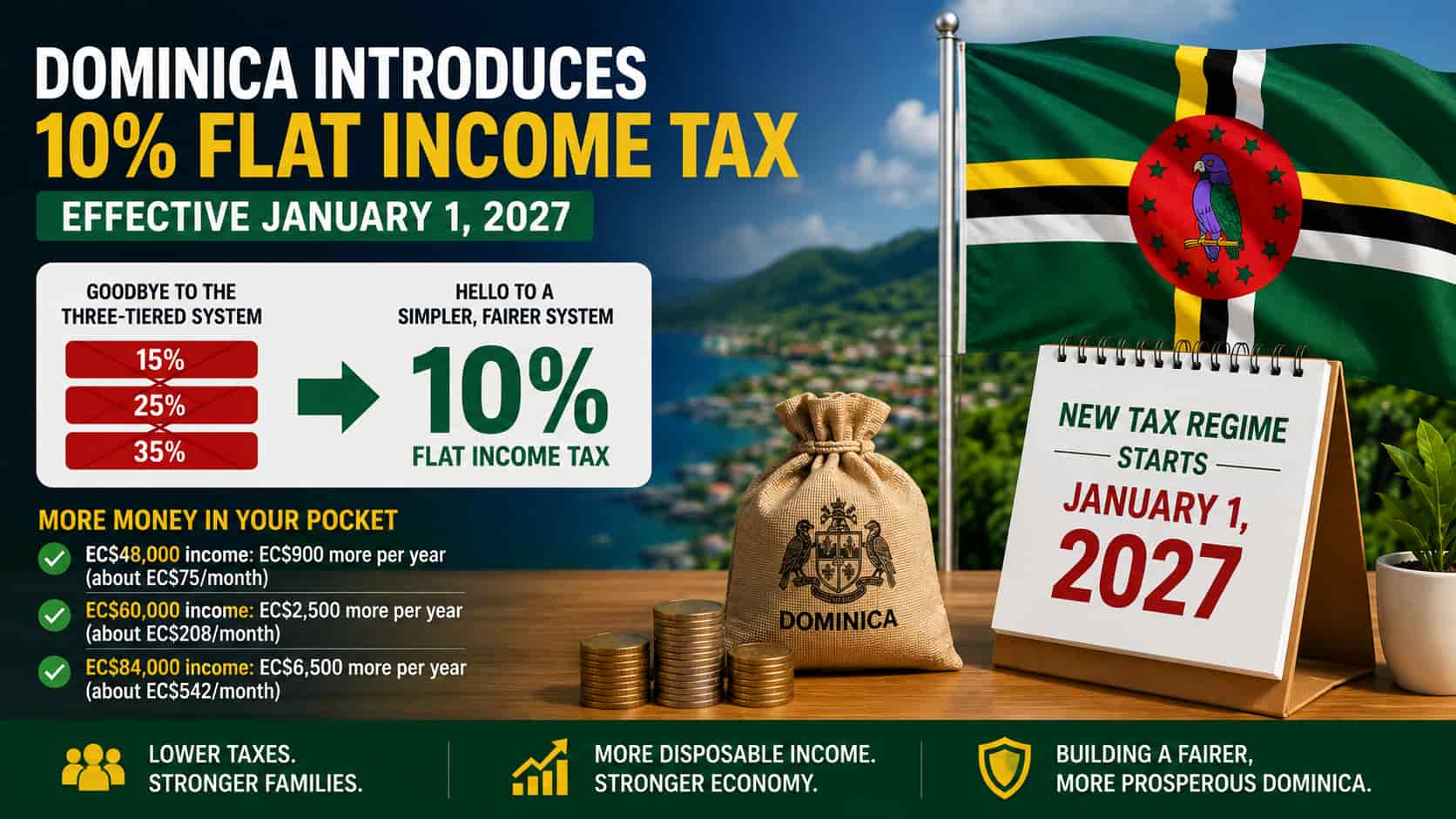
Dominica: The Government of Dominica has officially announced that it will replace the existing three-tiered personal income tax system of 15%, 25% and 35% with a flat income tax rate of 10%, starting from January 1, 2027.
Finance Minister Dr. Irving McIntyre announced the new tax regime, describing it as "the most significant income tax relief ever granted to the people of Dominica."
He announced that it is the largest personal income tax reduction in Dominica’s history, while presenting a national budget of EC$1,125,225,495 for the 2026-2027 fiscal year in parliament on Tuesday, August 4, under the theme, "Protecting Our Progress, Strengthening Our Independence, and Securing Our Future."
Dominica will introduce a 10% flat income tax rate from January 1, 2027, replacing the existing three-tier system. Stay tuned to WIC News for live budget updates. #wicnews #Dominica #NationalBudget #Budget2026 #BudgetLive #TaxReform #IncomeTax #Finance #E https://t.co/bd6PLwmJEp pic.twitter.com/tdFfJAA00a
— WIC News (@WIC_News) August 4, 2026
However, the Government will still maintain the existing personal tax-free allowance for individuals earning $30,000 or less annually under the new tax regime.
McIntyre announced, All these measures, those in the past and the flat rate today, demonstrate how throughout the tenure of this Government we have been reducing the income tax burden on individuals, allowing them to keep more of their pay to invest and improve the lives of their families.
McIntyre noted that the reform builds a long-standing commitment by the Dominica Labour Party administration to reduce the tax burden on working people and will certainly allow them to retain more of their earnings.
This is a sacrifice the Government is making to support the working people in our country. It is the most significant income tax relief ever granted to the people of Dominica. It will deliver meaningful savings to workers and make our tax system simpler and fairer, Dr. McIntyre noted.
He also mentioned that when the government assumed office in 2000, the country’s income tax structure consisted of rates of 20%, 30%, and 40%, and the tax-free threshold stood at just $12,000.
According to the government, the new system will increase workers' take-home pay. Examples include:
EC$48,000 annual income: EC$900 more per year (about EC$75/month)
EC$60,000 annual income: EC$2,500 more per year (about EC$208/month)
EC$84,000 annual income: EC$6,500 more per year (about EC$542/month)
Furthermore, the tax reform underscores the government’s continued commitment to strengthening household finances while supporting economic growth through increased disposable income for working Dominicans as the government noted that taxing income earned domestically will encourage more retired citizens, remote workers and investors to settle in the country.
Author Profile

Monika Walker is a senior journalist specializing in regional and international politics, offering in-depth analysis on governance, diplomacy, and key global developments. With a degree in International Journalism, she is dedicated to amplifying underrepresented voices through factual reporting. She also covers world news across every genre, providing readers with balanced and timely insights that connect the Caribbean to global conversations.
Latest
- CBI Index 2026: St. Kitts and Nevis retains top spot, Domini...
-
Jamaica wins Caribbean’s Leading Destination title at World... -
Belize: Wilson “Chato” Perez found murdered in Carmelita Vil... -
Barbadian Surfer Tommaso Layson wins two titles at Puerto Ri... -
Brazil's tight run-off sends wealthy families looking at Car...