
Trinidad and Tobago warned of drought risk ahead of 2027 dry season
Forecasters warn that prolonged dryness could reduce water supplies, affect agriculture and power generation, and increase heat and wildfire risks as the 2027 dry season approaches.
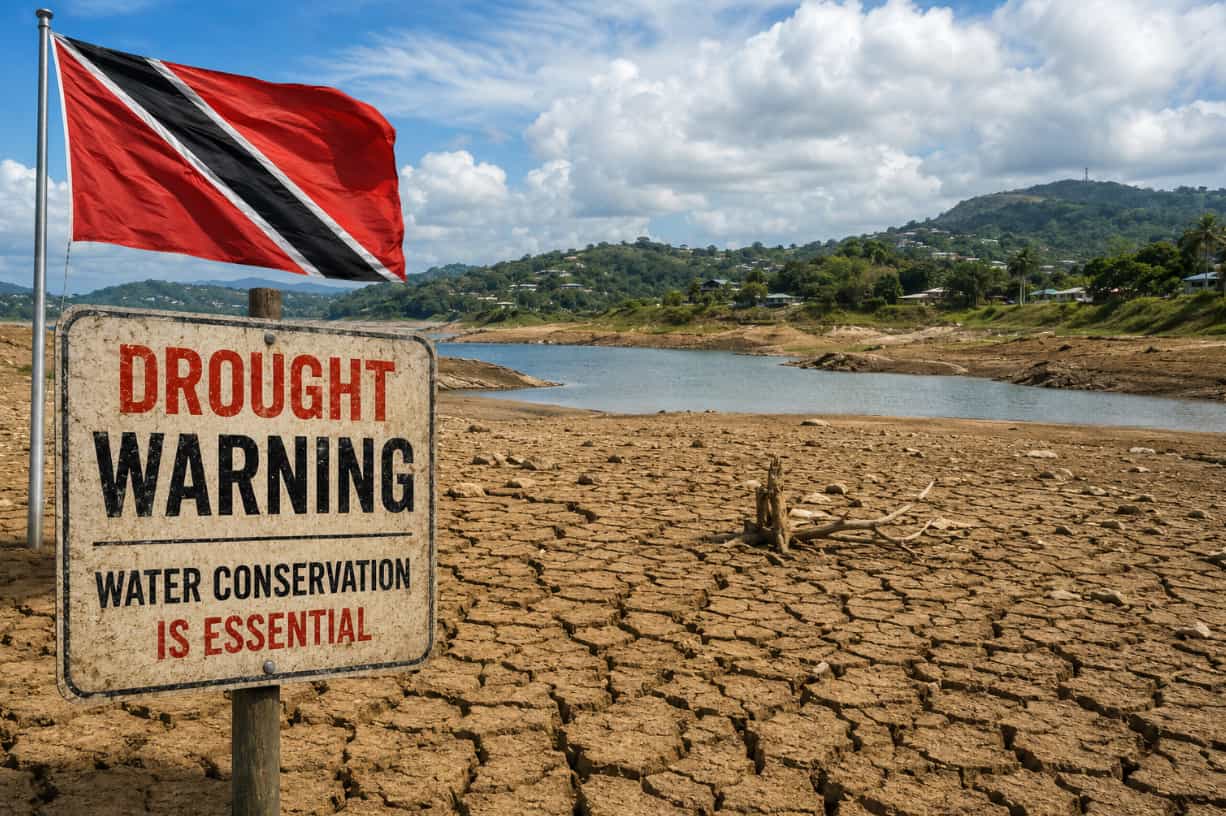
Trinidad and Tobago: The Trinidad and Tobago Meteorological Service (TTMS) has placed Trinidad on a drought watch for September 2026 and Tobago on a drought warning for October 2026 after forecasters said below-average dryness during the last half of the year would carry into the 2027 dry season.
Warnings for Trinidad and Tobago were issued in the Dryness/Drought Monitor and Outlook for Up To the End of September 2026. It called on people to practice water conservation as stocks in reservoirs and streams became depleted.
During the three-month period of May to July 2026, Crown Point, south-west Tobago and Valencia experienced dry spells while the central part of Trinidad, north-east Tobago and north-east Trinidad were relatively dry.
South-western Trinidad was between moderately dry and severely budding drought.
The TTMS predicted a drought warning for Tobago and north-eastern Trinidad and a moderately dry patch for the upper Caroni river basin by the end of October 2026.
A drought watch is also expected to stretch from Piarco westwards over the lower Caroni river basin into north-western Trinidad.
By the end of November 2026, a drought warning is expected to continue for Tobago and a drought watch is anticipated to stretch from the Caroni river basin into north-western Trinidad.
A short-term drought is predicted to parch Tobago, north-eastern Trinidad and the lower Caroni river basin between October and November 2026.
The TTMS also warned that a budding drought for agricultural purposes may arise in September 2026 over an area that stretches from Piarco westwards into the lower Caroni river basin.
A long-term drought watch may become necessary in December 2026 or January 2027.
The TTMS identified the various sectoral impacts of the predicted dryness. Agriculture would experience higher risk to crops, livestock and yield due to inconsistent and lower-than-average rainfall, increased hot weather and reduced soil moisture.
Lower-than-average rainfall would also result in reduced replenishment of impoundments, reservoirs, wells and stream flows, negatively affecting water supply schemes.
The service said that the water distribution sector would experience reduced inflows into storage reservoirs, impoundments and water supply infrastructure with consequential lower volumes of potable water available for distribution.
Meanwhile, the power sector would face reduced hydro-power generation due to decreased inflows into rivers and reservoirs as a result of deficient rainfall and prolonged dry spells.
The mining sector would experience reduced water availability for industrial processes, affecting production.
The TTMS also noted that natural vegetation, including forests, would experience stress and a heightened risk of fire outbreak due to hot weather, prolonged dryness and lower soil moisture.
It also said that the health sector would see a likely increase in heat-related illnesses and mortality due to prolonged exposure to higher temperatures and dryness and the risk of vector-borne diseases from stagnant water.
Following the advisories, the disaster risk management sector has been advised to implement management and response plans ahead of the upcoming 2027 Dry Season.
Author Profile
Stay updated with WIC News' coverage of all the major happenings and updates on the developing weather systems across Caribbean including Hurricanes, Tropical Storms or Cyclones.
Latest
- Bahamas issues severe weather warning to New Providence
-
Caribbean Airlines adds flights as Tobago gears up for Carni... -
Colombian Pastor dies after alleged gang beating in Cartagen... -
Trinidad and Tobago: 19-year-old found dead from gunshot wou... -
Dominica: Samantha Bazil of Wesley wins Crowned Miss Wob Dwi...