
Thousands of dead fish found in St. Maarten canal; Govt explores alternative cleanup
Authorities are considering small boats and nets to remove thousands of dead fish from the floodgate canal after the island's largest recorded fish kill overwhelmed available equipment and cleanup resources.
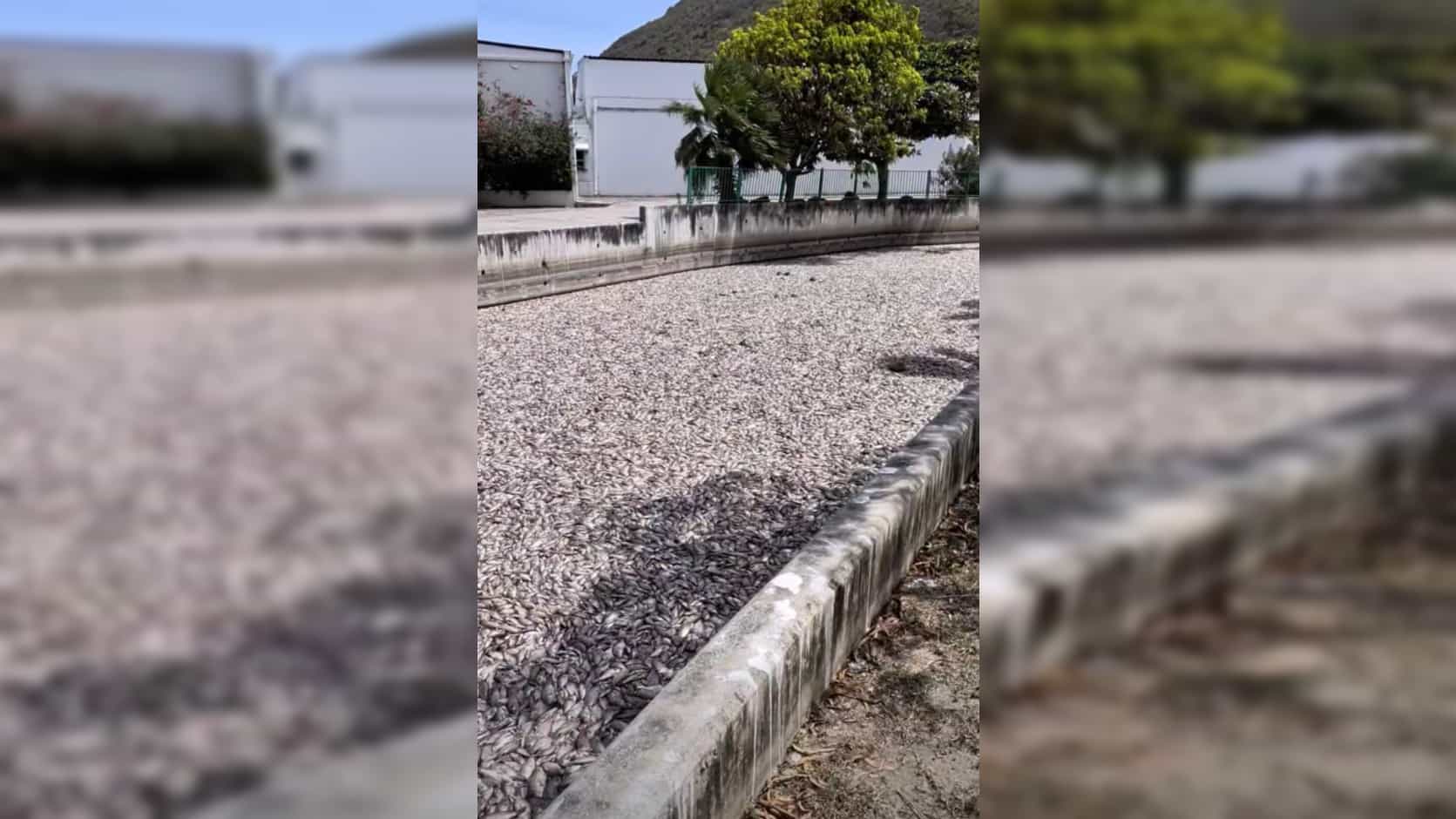
St. Maarten: The Ministry of Public Housing of St Maarten is looking for alternative methods to accelerate the cleanup of the thousands of dead fish floating in the floodgate canal located along A.T. Illidge Road leading to the Great Salt Pond following an unprecedented environmental incident overwhelmed the island’s available resources.
VROMI Minister Patrice Gumbs said that the discussions with key stakeholders took place on Monday evening to develop a more effective cleanup strategy. Among the options being considered is the deployment of small boats and nets to remove dead fish from the water before heavy machinery resumes operations today.
According to the minister, the island nation does not have the specialized equipment required to efficiently respond to a fish kill of such magnitude. "We are looking at alternative solutions because the equipment required for a cleanup of this scale is not available locally," Gumbs said.
While St Maarten has experienced fish kill incidents in the past but the Minister said that the current event is the largest ever recorded in the country.
The massive die-off was found on Saturday morning in the canal which connected to the Great Salt pond. By morning, a thick blanket of fish carcasses covered sections of the canal, creating a disturbing sight for motorists and nearby residents. As temperatures continued to rise throughout the day, the smell of decomposition intensified which prompted concerns about public health and environmental management.
The government immediately mobilized a contractor who at present has two excavators working at the site. However, progress has been very slow because the specialized screening buckets required for excavators to efficiently separate fish from water and mud are not available on the island.
Because of this, the cleanup operation has proven far more challenging than initially thought.
Talking about this, the Nature Foundation said that they previously documented these sudden mass die-offs which primarily impact invasive Tilapia that inhabit the pond. The combination of intense July heat, minimal rainfall as well as low water levels creates an ecological crisis in the shallow waters.
The primary cause they described is a rapid depletion of dissolved oxygen. They explained that when the water temperature increases, it loses its capacity to hold oxygen. This issue is worsened by stagnant water and blocked floodgates, which further restricts the intake of fresher water and trap the fish in an increasingly toxic environment.
Author Profile

Sasha Baptiste reports on local Caribbean news with a strong focus on crime, justice, community issues, and entertainment. With a background in sociology and journalism, she brings a grounded, people-centered perspective to her reporting, shedding light on the challenges and resilience within Caribbean societies.
Latest
- Ghana TikToker 'Bawumia Ba' re-arrested, faces fresh offensi...
-
Missing Ministry of Works employee found dead in Arima; poli... -
Massive Georgetown fire displaces over 20 residents after La... -
Antigua: Human remains reportedly found off Northeast Coast -
Thousands of dead fish found in St. Maarten canal; Govt expl...