
“Mixed Claim” Leaves Choksi Exposed to Higher Legal Costs
Legal analysts say that even if the case proceeds beyond its current stage, Mehul Choksi could be required to deposit a substantially higher sum as security in order to continue with the claim
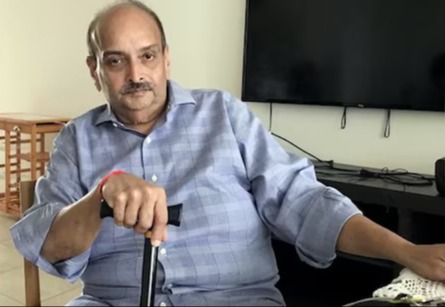
After the UK court ordered Mehul Choksi to deposit £677,000 as security, his lawyers are now arguing that if the matter proceeds to trial in November, the security of costs should be limited to £337,000 or less. His legal team is citing the Qualified One-Way Costs Shifting (QOCS) provisions under the Fatal Accidents Act 1976 allows to cap the costs.
His legal team submitted that, under Civil Procedure Rules (CPR) 44.13 and 44.14, the court should cap the defendants’ security for costs at the level of the damages he has claimed. However, CPR 44.15, which allows the court to remove that protection in certain circumstances was not relied upon.
The rule (CPR 44.15) provides that the costs cap may be disapplied in cases that are complex, involve an anticipated lengthy trial, include multiple parties, or where the claimant resides outside the UK. Legal practitioners note that if CPR 44.15 is engaged, the Qualified One-Way Costs Shifting (QOCS) protection can be set aside, potentially exposing a claimant to full legal costs.
Legal analysts say that even if the case proceeds beyond its current stage, Mehul Choksi could be required to deposit a substantially higher sum as security in order to continue with the claim. In complex multi-party litigation, some experts note that such figures can rise significantly and, in certain circumstances, may reach even higher than £5 million.
The Qualified One-Way Costs Shifting (QOCS) regime, developed under the Fatal Accidents Act 1976, was designed to protect claimants particularly individuals bringing personal injury claims by limiting their exposure to adverse legal costs.
To that extent, the Court of Appeal has already clarified the limits of QOCS protection. In Brown v Commissioner of Police of the Metropolis [2019] EWCA Civ 1724, the Court held that where proceedings include claims other than claims for personal injury, the automatic protection of QOCS falls away.
Lord Justice Coulson stated that QOCS was never intended to allow claimants to “use the fact that their claims include a claim for damages for personal injury to gain automatic costs protection in respect of their claims for non-personal injury damages,” confirming that such “mixed claims” engage the exception under CPR 44.16(2)(b) and leave costs to the court’s discretion.
Similarly, as per court documents, Mehul Choksi’s claim is not solely a personal injury claim. It is a ‘mixed claim’ that includes accommodation for his brother, private travel arrangements, and private security for a period exceeding 12 months, together amounting to approximately £300,000.
The Court further made clear that QOCS does not exist to shield claimants from the ordinary consequences of litigation strategy, particularly where non-personal-injury claims dominate the proceedings or where a claimant has failed to beat a Part 36 offer. In such circumstances, the Court emphasised that it would be wrong to permit a claimant to avoid adverse costs “merely because a claim for damages for personal injury was pleaded and rejected.”
The act does not apply to the present proceedings. Choksi has instructed King’s Counsel, among the most expensive advocates in the English legal system, a step that has forced the defendants to engage similarly senior lawyers.
In a multi-party, cross-border dispute involving jurisdictional challenges and the prospect of a lengthy trial, legal fees could quickly exceed the damages Choksi is claiming. It further strengthened the case for requiring Choksi to provide security that reflects the defendants’ likely legal expenses rather than the value of his claim.
Orders for costs made against the claimant may be enforced to the full extent of such orders with the permission of the court where the claim is found, on the balance of probabilities, to be fundamentally dishonest.
It appears that Mehul Choksi’s lawyers are attempting to shield themselves from him in light of the court’s order requiring the deposit of £677,000 as security for costs, at a stage when the court is still determining whether the claim even falls within the jurisdiction of the UK courts.
The legal position emerging from the case is clear. QOCS under CPR 44.13 and 44.14 does not prevent an order for security for costs. CPR 44.15 provides a route by which QOCS can be removed altogether in appropriate cases. Most importantly, security for costs is assessed by reference to realistic defence costs, not by reference to the damages claimed.
According to Barrister Michael Leeds, Choksi’s lawyer, Edward Fitzgerald is a very intelligent man and is aware that they will not win the case, as the probability of success is very minimal. He claims that Fitzgerald is merely “milking the cow” and wasting taxpayers’ money, indicating what he describes as a malicious agenda.
From the perspective of Mehul Choksi, the defamation claim is based on the following grounds as stated by his lawyers:
Lawyers: One of the main arguments made by his lawyer Edward Fitzgerald KC and the legal team is about the travel patterns of the five defendants. They claim that the individuals travelled to Antigua and Barbuda in two separate groups during April and May 2021. Choksi’s lawyers have questioned how they could have been on similar flights if, as they say, they had no connection with each other before.
This claim was questioned by a private investigative team led by former Metropolitan Police Assistant Commissioner Tarique Ghaffur CBE QPM. The team included experienced former Scotland Yard officers who travelled to the Caribbean and stayed there for about one month to look into the matter.
Independent Investigation: Investigators reportedly recorded an interview with the travel agent who handled the bookings. The agent stated that in the travel industry it is quite common for unrelated travellers to go to the same destination within a short period for holidays, sometimes even on similar routes or flights. The agent explained that people travelling within a few months of each other does not by itself show that they know one another or have any professional connection. Documentary examples of similar booking patterns were also provided to support this view, particularly during the COVID period when global flight connections were limited and flights to destinations such as Antigua were operating as little as once a week.
The second piece of evidence which was brought before the court was a CCTV footage which appeared to show Gurdip Bath entering a vehicle with another individual who has not been identified yet but was standing nearby. This footage was relied upon by the legal team of Mehul Choksi as part of its case narrative.
Investigation: A forensic video analysis carried out by a United Kingdom-based forensic team found that the footage was of insufficient quality for reliable identification. According to the experts, the resolution was too poor to confirm key details, including the vehicle’s registration number, which could not be read. While Mr Bath has acknowledged that the person accompanying him was Leslie Farrow-Guy, the forensic specialists stated that the video itself does not allow any individual to be identified with certainty. The judgement copy also notes that much of the evidence relied upon in the claim consists of hearsay or opinion. “In some instances they offer their opinions as to what that evidence shows,” the judgement added.
Another argument by the legal team of Mehul Choksi claims that following his alleged kidnapping, three people including Bath, Barbara and Farrow-Guy had a meeting with the Prime Minister of Antigua and Barbuda Gaston Browne.
Independent Investigation: This claim was reviewed by an independent investigative team which confirmed with the Office of the Prime Minister that PM Browne was not in Antigua and Barbuda on the date mentioned. Records examined by the investigators show that on 23 May 2021, Prime Minister Browne was in New York and later addressed the 74th World Health Assembly in Geneva via Zoom.
The legal team for Mehul Choksi has also relied on a vehicle hire document related to a car used by Leslie Farrow-Guy, which lists Gurmit Singh as an additional driver. Choksi’s lawyers argue that the presence of Singh’s name on the document shows that the individuals knew each other beforehand and were acting in coordination.
Investigation: This claim was reviewed by the team, which examined records obtained directly from the car hire company with support from forensic specialists. The investigation found that the hire agreement was a digitally generated document and that it was altered on 29 May 2021. Forensic analysis indicated that Gurmit Singh’s details were added through a deliberate edit after the document was issued. This raises the question of why changes were made more than a week after the vehicle was hired. The investigation also noted that the driving licence number listed was incorrect.
One of the major elements relied upon by Mehul Choksi is the police investigation report which was prepared by an Inspector of Antigua and Barbuda Royal Police Force Adonis Henry. This report’s credibility was challenged after a fellow investigating officer Cedric Williams made some disclosures. Williams’ role in this investigation later came under scrutiny.
In a 15-page signed statement given to Oliver Laurence, Corporal Williams admitted that he had become too personally involved with Priti Choksi during the investigation. He stated that this closeness led to his removal from the case and raised questions about how the investigation had been handled. Senior police officials, including the Police Commissioner and deputy commissioners, also raised concerns about the fairness of the investigation after these admissions came to light. In his statement, Corporal Williams said, “I was too close to Mrs. Choksi and her family in this matter and possibly telling her too much information.” This admission has since been cited as weakening the credibility of the police report. The relationship between Williams and Mehul Choksi’s wife has also raised concerns about possible bias in the investigation. Observers say this may have affected the reliability of the findings. It has further been pointed out that the same investigation later contributed to Interpol withdrawing its Red Notice against Mehul Choksi.
Choksi’s legal team has also placed reliance on a settlement agreement which was executed in Dominica relating to his alleged entry into the island nation. As part of this agreement, statements were signed by the Chief of Police of Dominica, the Attorney General of Dominica, the Director of Public Prosecutions of Dominica as well as a serving police officer. The statement affirmed that ‘the defendants, having reviewed certain documents and being satisfied that the claimant was forcibly brought from Antigua to Dominica and was accordingly not in Dominica by his own voluntary act.’
According to information presented to the investigating team, the circumstances in which these statements were made have been questioned. It was indicated that the individuals involved were personally threatened with defamation proceedings in relation to their official actions. It has been suggested that this pressure may have influenced their agreement to the wording of the settlement. Investigators also referred to contemporaneous records, including the Roseau Police Station diary, which documents the location and manner of Choksi’s arrest. These records were cited as primary evidence that contradicts the version of events reflected in the settlement statement. In addition, five other officials, including customs and immigration officers, also provided statements during the investigation.
In their seventh line of argument, Mehul Choksi’s legal representatives claim that he was taken from Antigua and Barbuda to Dominica on 23 May 2021 aboard a sailing vessel named Calliope of Arne. Investigators later reviewed this claim by examining official immigration data and telecommunications records gathered during the inquiry.
Records from the Antigua and Barbuda Immigration Department show that the vessel left Antigua at 10:09 am on 23 May 2021. Investigators, however, noted that Choksi is recorded as leaving his residence at about 5:00 pm, nearly seven hours after the vessel had already departed. The team also examined telecommunications data which showed that the mobile phone used by Fernandes Fertinant, the captain of Calliope of Arne, connected to mobile towers in Guadeloupe at around 5:47 pm on the same day. The handset later connected to towers in Dominica at approximately 11:07 pm and these timings indicate that the vessel was already on its way to Dominica at a time when Choksi had still not left his home. In addition, Prime Minister Gaston Browne told Antigua and Barbuda’s Parliament that there is no evidence to support Choksi’s claim that he was abducted. Police Commissioner Atlee Rodney also stated publicly that investigators had not found any substantial evidence to back the allegation. Both officials said that the information gathered during the investigation does not support claims that Choksi was forcibly taken from Antigua.
During their investigation, the investigators further recovered a statement of a national from Jamaica who took the responsibility of transporting Mehul Choksi from Antigua to Dominica. The investigators stressed that this acknowledgement aligns with official immigration entry and exit records as maintained by the Antiguan authorities which documents Choksi’s movements during that period. The statement has also been referenced as additional support for the travel timeline established through official border control records.
WhatsApp chat records involving Barbara Jarabik were also provided to the investigative team. According to the review presented, the messages show Mehul Choksi making several personal approaches toward Jarabik during the period in question.
The ones who reviewed the material have further characterised these communications as a clear attempt by Mehul Choksi to build a personal relationship in the context of the wider dispute.
In spite of claims of an extra-marital relationship with Barbara, Choksi continues to reside with his wife Priti Choksi with commentators arguing that this continuity in a good marital relationship clearly suggests a level of awareness or involvement of his wife in disappearance. They also said that no woman would stay with such a man, however the decision to continue supporting his husband Mehul Choksi despite the affair claims implies that Priti Choksi might herself be complicit in the entire plan. If the alleged affair or so-called “honey-trap” claim were genuine, it would be expected that she would have distanced herself from him. Instead, her decision to stay with him has led to speculation that she may have been aware that this narrative was being used as part of a wider attempt to avoid the ongoing legal proceedings in India.
It is now expected that the Indian investigative agencies will be keeping an eye on Mehul Choksi as he will be submitting such high amount to the London Court while all his assets are seized and there is no other explanation of his source of funds.
The recent judgement also notes: “There is no detailed evidence as to Mr Choksi’s financial position, nor as to his ability to raise money to cover the security. There is no explanation as to how he is meeting his own legal costs.”
Legal observers have also expressed doubts about the strength of the defamation claim. Among them is experienced barrister Michael Leeds who has been closely following the case. Based on assessments shared by practitioners familiar with the proceedings, Choksi’s chances of success have been estimated at around 5 percent, with some lawyers suggesting there is a strong possibility that the claim may ultimately fail in court.
Author Profile

Monika Walker is a senior journalist specializing in regional and international politics, offering in-depth analysis on governance, diplomacy, and key global developments. With a degree in International Journalism, she is dedicated to amplifying underrepresented voices through factual reporting. She also covers world news across every genre, providing readers with balanced and timely insights that connect the Caribbean to global conversations.
Latest
- Trinidad: Three masked men rob and beat Valencia supermarket...
-
Guyana: Three-year-old boy missing after entering waterway i... -
Guyana: Security guard Esan Rose shot dead at Georgetown sup... -
Guyana: Teacher and former national athlete Leslyn Major die... -
Belize: Several injured after steps collapse during wake in...


