
St. Kitts and Nevis redesign citizenship programme, introduces genuine link requirement
The reforms introduce mandatory residency and a “genuine link” requirement, ending a system under which citizenship could be obtained without any physical presence in the country.
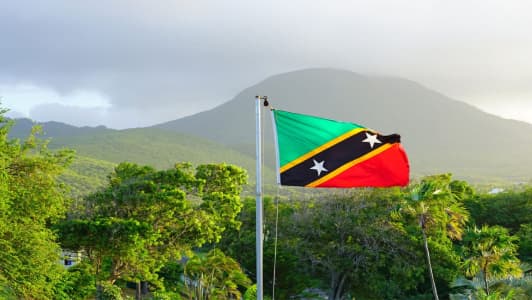
The Government of St. Kitts and Nevis announced a comprehensive rehaul of its “citizenship programme” and introduced a mandatory “genuine link” requirement.
To this end, new residency requirements have been introduced, marking a significant shift from the previous framework under which no such residency obligation was required.
Speaking during a roundtable discussion, PM Terrance Drew also announced that the Government of St Kitts and Nevis is introducing two new reforms to the country’s Citizenship by Investment (CBI) Programme as it continues to strengthen the security of the programme and attract reputable and creditable investors.
He said that the first measure will see the implementation of a residency feature for investors, while the second provides for the collection of biometric data from potential citizens around the world.
While taking about the steps taken by the government, PM Drew noted, “We have taken strict measures by increasing the minimum investment; strengthened further our due diligence, making sure that the processes are transparent; we have shifted our CBI Unit to become a statutory body to have proper oversight, and now we are making two more significant advancements,” the prime minister stated.”
“Genuine Link”: Residency, Investment, and Long-Term Engagement
The redesigned framework introduces a “genuine link” requirement, through clearly defined legal and policy criteria.
This includes structured physical presence and residency within the Federation.
Applicants are encouraged to demonstrate substantive economic presence, such as establishing businesses that employ citizens and residents of the Federation.
The framework prioritises productive investments aligned with national development priorities.
It also recognises long-term social, cultural, philanthropic, or national development engagement as key components of integration.
It will also include Innovation Pathway for individuals who establish an active, long-term partnership with St. Kitts and Nevis. This includes innovation-driven business, research, technology, skills transfer, or technology projects that contribute towards economic diversification.
Enhanced post-naturalisation obligations have been introduced to strengthen accountability and ensure sustained engagement with the Federation.
The CIU further mentioned that these reforms form part of a long-term strategy which is aimed at safeguarding national security, strengthening programme integrity while aligning the country’s naturalisation standards with evolving international expectations applicable to visa-exempt third nations.
While announcing these changes, the unit added that the Citizenship Programme will also commence its transition away from contribution-based pathways. The residency-and-participation based routes will be focused instead of passive financial contributions, aiming to encourage meaningful engagement and long-term connection with St. Kitts and Nevis.
Officials said that the redesigned model reflects international best practice which draws alignment with standards applied in permanent residency and naturalisation frameworks in jurisdictions such as the European Union, the United Kingdom, and the United States.
Not only this, but the new framework also incorporates strengthened governance and security measures. These include multi-layered due diligence, continuous monitoring, enhanced vetting aligned with international anti-money laundering and counter-terrorism financing standards, stronger institutional oversight, and a clear separation between policy formulation, application processing and decision-making functions.
While commenting on these new reforms, the Chairman of the Citizenship by Investment Unit said that the country’s security is inseparable from that of its international partners. He further noted that the programme remains a carefully governed development tool supporting economic diversification in sectors such as technology, healthcare, housing and water security.
The Government further confirmed that all passports of St Kitts and Nevis are issued exclusively by the Federation of St Kitts and Nevis and are handed over solely through official government channels such as the Federation’s embassies and consulates.
“No passports are issued, delivered, or distributed through intermediaries or any third-party entity, ensuring full state control, traceability, and security at every stage of issuance,” the CIU added.
The CIU further noted that the new changes aim to enhance the integrity and competitiveness of the Citizenship Programme.
Additionally, the government has pointed to the recent groundbreaking of the Prime Creative Arts Centre as an example of how the country’s development strategy and the CBI Programme are assisting the country to move forward in a positive direction. Speaking at the ceremony, Prime Minister Terrance Drew said the project represents an investment in belief, opportunity and confidence in the people of the Federation.
He added that the expansion into the creative or “Orange” economy forms part of a broader effort to diversify the economy alongside healthcare, housing, education, tourism, agriculture and infrastructure development, strengthening resilience through multiple economic pillars.
Chairman of the Citizenship by Investment Unit, Calvin St Juste, said that the Creative Arts Centre reflects the intent behind the programme’s Public Benefit Option, which channels regulated international investment into projects with measurable public impact. He explained that such projects are required to demonstrate clear national value, create jobs, build skills and remain subject to continuous monitoring and accountability.
According to Chairman St Juste, initiatives of this nature align with the newly introduced “genuine link” framework, reinforcing the principle that citizenship must be connected to meaningful contribution, sustained engagement, and long-term development within St. Kitts and Nevis.
Author Profile

Monika Walker is a senior journalist specializing in regional and international politics, offering in-depth analysis on governance, diplomacy, and key global developments. With a degree in International Journalism, she is dedicated to amplifying underrepresented voices through factual reporting. She also covers world news across every genre, providing readers with balanced and timely insights that connect the Caribbean to global conversations.
Latest
- PM Drew returns to St. Kitts and Nevis after stroke recover,...
-
WATCH: Ne-Yo, Tabou Combo, Extasy Band and Full Blown perfor... -
Trinidad: Wanted man killed in police-involved shooting duri... -
American Airlines flight returns to Miami after passenger al... -
St. Kitts and Nevis Broadcaster Saju Ng’alla dies


