
US Asylum Seekers Are Not Criminals: Understanding the difference and the economic reality
The agreement has sparked public concern largely because of confusion between refugees and criminals and misunderstandings about what refugee relocation actually means.
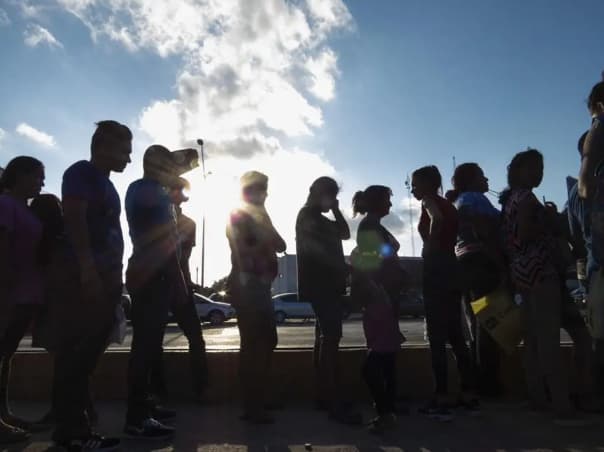
Public discussion surrounding the recently signed agreement between the Government of Dominica and the United States has caused a major wave of speculation and public concern with much of it driven by incomplete information and misunderstanding.
It is very clear that people are confused about two very different concepts: asylum seekers also known as refugees and criminals as the two are not the same. Experts argue that treating them as such does not just misinform the public, but it also undermines humanitarian law.
As speculation grows, it is important to clearly separate fact from assumption and explain what refugee relocation actually means, who refugees are and how such arrangements function economically.
US Asylum Seekers and Criminals Are Not the Same
A refugee is not someone fleeing justice but someone fleeing conflict, instability, persecution or economic collapse. He seeks safety, employment and a chance at stability. Most refugees who travel to the United States do so legally through asylum systems or humanitarian channels and not criminal networks.
While criminality involves the violation of law, refugee status is a legal and humanitarian classification that is governed by international conventions and domestic asylum systems. Deportation decisions related to asylum claims are administrative or legal outcomes and not criminal judgements.
Why US Asylum Seekers Go to the United States
Refugees who arrive in the United States are not seeking crime or chaos but work, employment and dignity. They are looking for a way to send money home, support their families and build a future. Several work in sectors Americans themselves increasingly avoid, including agriculture, construction, caregiving, logistics and service industries.
When asylum claims fail or policies change, deportation does not turn these individuals into criminals as it simply changes where they are legally permitted to reside.
What Relocation to Dominica Would Actually Mean
If refugees are relocated from the United States to Dominica under a managed and legal framework, the individuals arriving will largely be working-age adults and not criminals. These are people who will contribute positively towards the overall economy of Dominica.
The most important point which is often missed in public debate is that the host countries are compensated.
Under such arrangements, the originating government, in this case the United States government will be paying a per-person support cost to the receiving country i.e. Dominica. This funding typically covers housing, food, basic services, and administration.
The support will be provided per week or month, with details to be still released officially by the Dominican government.
Guaranteed Rental Income and Local Economic Circulation
One immediate economic impact of relocation programmes is guaranteed rental income. The sending country covers settlement costs including accommodation, food, basic living expenses and essential support services.
It means that when refugees arrive in Dominica then the local accommodation providers receive guaranteed rental income. That money flows directly into hotels, guesthouses, apartments and the pockets of local property owners. This will create immediate, real economic activity within the local economy and will support businesses, jobs and communities across the country.
The new agreement between the United States of America and Dominica will therefore create:
Stable rental income for property owners
Increased demand for utilities, food, transport and services
Employment opportunities in property management, maintenance, healthcare and administration
The United Kingdom Example: How It is Working in Real Life
The United Kingdom provides a clear read-world example of how asylum and relocation system operates financially. Due to housing shortages, the UK Government has housed asylum seekers in hotels as temporary ‘contingency accommodation’. Originally, the policy was short term, but it has persisted for years now.
According to the official site of the UK Parliament, asylum seekers receive a weekly allowance of around £49 per person for basic necessities. Moreover, people in accommodation where meals are provided get an additional £9.95 a week. Not only this but some additional payments are available to certain groups which includes pregnant women and children under four.
It is said that small hotels and private operators have received guaranteed long-term income since years through this arrangement.
While the UK is actively trying to reduce reliance on hotels, the example proves one thing clearly: host countries are paid and local economies benefit financially.
What This Could Mean for Dominica
If refugees are relocated from the United States to Dominica under a structured framework, then similar economic mechanics would apply. The United States would provide regular per-person financial support which will be paid weekly or monthly.
This means that the economic effect will not be negative by default, on the contrary, the United States will provide financial support per person, housing demand will rise which will create stable rent income, local services and employment will expand with money entering the economy on a predictable and recurring basis.
Separating Fear From Facts
Calling refugees “criminals” is not just incorrect, it is irresponsible. Refugees are people displaced by circumstance and not intent. When handled properly, refugee resettlement can be economically positive while still respecting national sovereignty and public order.
The real risk lies not in refugees themselves but in misunderstanding how such agreements function.
Author Profile

Monika Walker is a senior journalist specializing in regional and international politics, offering in-depth analysis on governance, diplomacy, and key global developments. With a degree in International Journalism, she is dedicated to amplifying underrepresented voices through factual reporting. She also covers world news across every genre, providing readers with balanced and timely insights that connect the Caribbean to global conversations.
Latest
- Dominica featured by AFAR as "Caribbean’s best destinations...
-
Guyana plans direct flights to French Guiana as new air agre... -
St. Kitts earns 11 honours in 2027 Scuba Diving Readers’ Cho... -
Grenada: PM Dickon Mitchell announces November 5 general ele... -
Barbados Open Water Festival set to attract hundreds of swim...


