Political Shock in Britain: Keir Starmer resigns as PM after Labour MPs turn against him
Mounting criticism from Labour MPs over policy missteps, falling public support and internal divisions forced Starmer to step down, paving the way for a leadership transition without triggering a general election.
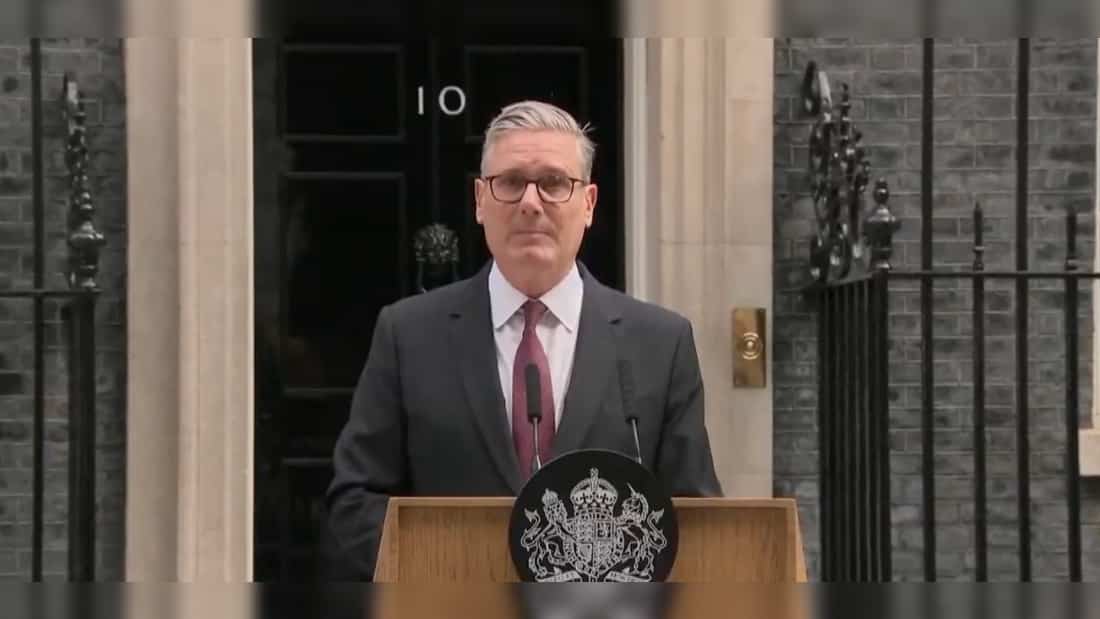
United Kingdom: British Prime Minister has officially resigned from this post after facing an uprising within his center-left Labour Party and pressure from Labour Party ministers. Starmer was reportedly left in tears outside Downing Street as he resigned both as leader of the ruling Labour Party and Prime Minister of Great Britain.
He said that becoming Prime Minister of the United Kingdom was the “proudest moment of my life”. The former PM appeared to be getting emotional as he thanked his wife Victoria for her support at the end of his speech.
Both of them stood before No 10 before going back in, again to loud applause and cheers for Sir Keir’s team gathered outside. He will remain Prime Minister until a new leader is chosen.
The recent announcement is now expected to clear the path to power for Starmer’s likely successor Andy Burnham. The next prime minister will become the country’s seventh leader in a decade.
Political experts argue that the development marks an astonishing fall for a leader who sealed a landslide election victory in 2024, riding a wave of popular discontent against 14 years of right-wing Conservative rule. However, Starmer’s political fortunes have taken a fit from a series of bruising scandals while several of his own lawmakers blamed him for policy missteps which have proved deeply unpopular among the public.
Notably, there will be no general election. Under the British parliamentary system, voters elected the Labour Party to govern, and it is that parliamentary majority that determines who becomes Prime Minister.
The new Labour leader will then become Prime Minister and serve the remainder of Labour’s mandate unless a general election is called earlier. Labour won a large parliamentary majority in 2024, so a change of leader does not automatically trigger a general election.
🚨 BREAKING: Keir Starmer gets emotional as he resigns as Prime Minister
— Politics UK (@PolitlcsUK) June 22, 2026
"I shall spend more time on the most important job. Being the best husband I can to my fantastic wife Vic... and being best dad I can to my beautiful children, who have been my pride and joy" pic.twitter.com/3OaOMTqPLQ
One of the major reasons behind his resignation was last week’s parliamentary by-election in Makerfield. Andy Burnham, the highly renowned former Mayor of Greater Manchester won the seat and returned to Westminster.
It is said that Burnham has long been viewed by Labour MPs as a much stronger communicator than Starmer.
Not only this, but despite winning a historic landslide victory in July 2024, Starmer’s subsequent two years in office were marred by economic difficulties, major policy U-turns, and internal controversies (such as the resignation of his Chief of Staff over an ethics row). Both his personal approval ratings and Labour's national polling plummeted sharply. Backbench MPs grew deeply spooked that keeping Starmer would decimate their majorities at the next general election, particularly given rising pressure from Nigel Farage's Reform UK party.
Following the announcement of Starmer’s resignation, Andy Burnham is now set to be sworn in as Labour’s new MP for Makerfield in Westminster at 2:30pm this afternoon.
Author Profile

Monika Walker is a senior journalist specializing in regional and international politics, offering in-depth analysis on governance, diplomacy, and key global developments. With a degree in International Journalism, she is dedicated to amplifying underrepresented voices through factual reporting. She also covers world news across every genre, providing readers with balanced and timely insights that connect the Caribbean to global conversations.
Latest
- Trinidad: Three masked men rob and beat Valencia supermarket...
-
Guyana: Three-year-old boy missing after entering waterway i... -
Guyana: Security guard Esan Rose shot dead at Georgetown sup... -
Guyana: Teacher and former national athlete Leslyn Major die... -
Belize: Several injured after steps collapse during wake in...