
Scientists satellite-tag Hawksbill Turtle 'Sandy' in Nevis to track her Caribbean journey
The critically endangered hawksbill turtle will be tracked through the 2026 Tour de Turtles programme, helping scientists study migration routes and identify habitats that require long-term protection.
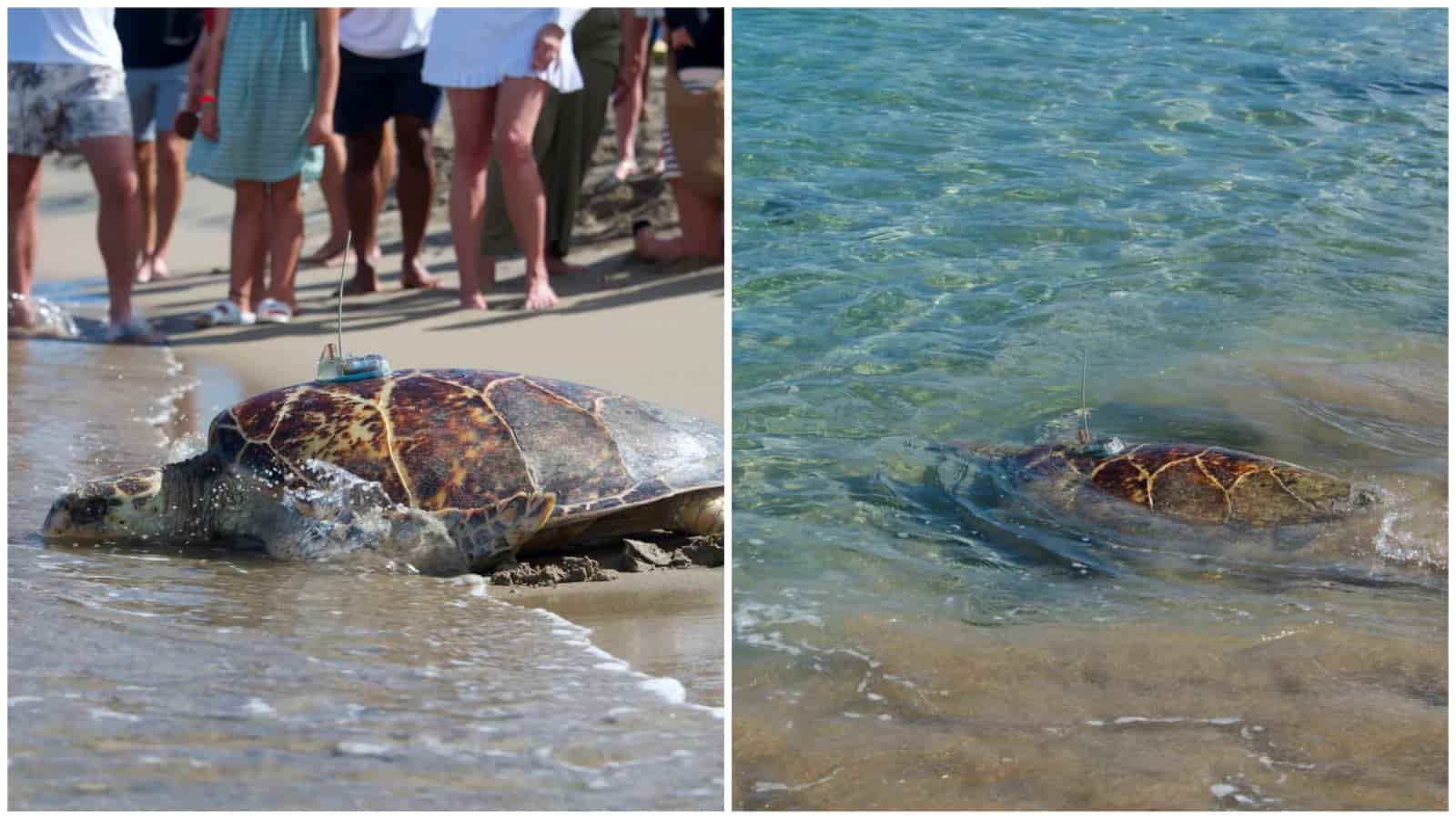
St. Kitts and Nevis: The Sea Turtle Conservancy (STC) has satellite-tagged Sandy an adult female hawksbill sea turtle after she nested on Lovers Beach in Nevis. This tagging will now allow scientists and the public to follow her migration across the Caribbean in real time.
Sandy is one of the newest participants in the 2026 Tour de Turtles which is an annual conservation program that uses satellite telemetry to study the long-distance movements of sea turtles after nesting. The initiative also raises awareness about the threats facing these endangered animals.
According to STC, Sandy is sponsored by Four Seasons Resort Nevis which has partnered with the organization for the past 20 years to support sea turtle research, conservation and education across the region. The resort's longstanding collaboration has contributed to protecting nesting turtles and advancing scientific understanding of their migration patterns.
The organization noted that hawksbill sea turtles are listed as Critically Endangered by the International Union for Conservation of Nature (IUCN). Their populations have declined significantly over the years which is largely due to illegal hunting for their distinctive shells which have historically been used to make decorative "tortoiseshell" products such as jewellery, combs and ornaments. Today, additional threats include habitat loss, accidental capture in fishing gear, marine pollution and climate change.
Data from Sandy's satellite transmitter will help researchers identify important feeding grounds, migration routes and habitats that require protection. Scientists say tracking these movements is essential because hawksbill turtles often travel hundreds or even thousands of kilometres across international waters after completing their nesting season.
Information available on Sandy's tracking profile shows that she was released on July 22, 2026, after nesting on Lovers Beach. She measured 83 centimetres in curved carapace length and 71 centimetres in curved carapace width which indicated she is a mature breeding female.
Initial tracking data indicates that Sandy remained close to the Nevis coastline during the first hours after her release, a behaviour researchers say is common before turtles begin their longer post-nesting migrations to distant foraging grounds.

The STC also noted that the members of the public can follow Sandy's journey through the Tour de Turtles tracking platform where her movements will continue to provide valuable information for conservationists working to safeguard one of the world's most endangered marine turtle species.
Author Profile
The WIC News News Desk delivers timely and reliable coverage of stories from across the globe. From breaking developments to in-depth reports, the desk provides readers with balanced perspectives on politics, business, culture, technology, and world affairs. Its role is to ensure audiences have access to credible information on issues shaping both regional and international landscapes.
Latest
- WATCH: Ne-Yo, Tabou Combo, Extasy Band and Full Blown perfor...
-
Trinidad: Wanted man killed in police-involved shooting duri... -
American Airlines flight returns to Miami after passenger al... -
St. Kitts and Nevis Broadcaster Saju Ng’alla dies -
WATCH: World Creole Music Festival 2026 opens with vibrant p...


